40 Most Affordable Retirement Cities for 2025
Retirement planning often focuses on how much you've saved, but where you retire matters just as much when considering your real estate options. A city with affordable housing, low property taxes, and quality healthcare can make your retirement savings last 10 or 20 years longer than a high-cost location.
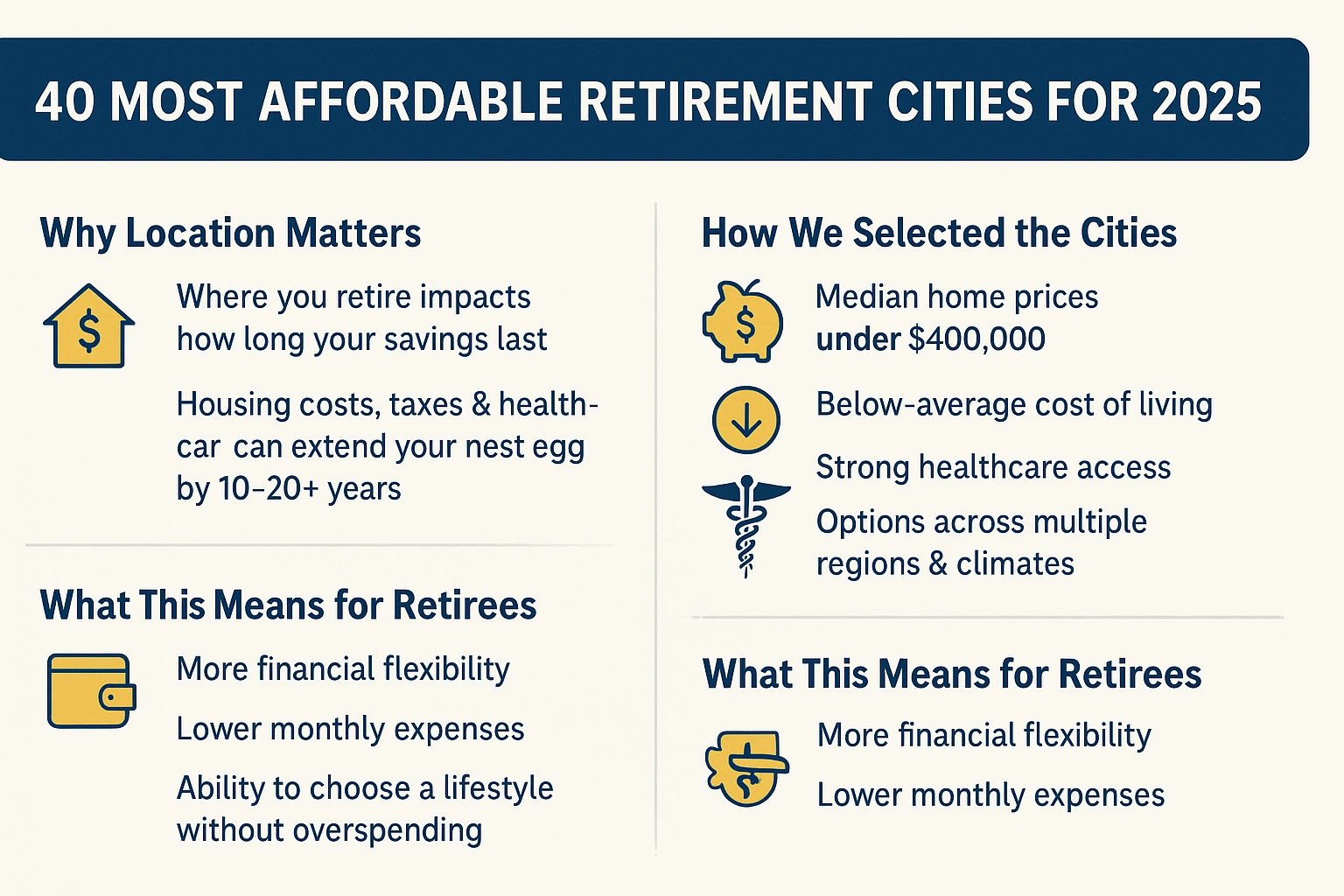
We identified 40 cities across the U.S. where median home values stay under $400,000, cost of living runs below the national average, and healthcare access remains strong. These cities span different regions and climates, so you can find what fits your lifestyle without draining your retirement accounts.
Best places to retire in the USA on a budget
The best retirement cities balance three things: low cost of living, access to healthcare, and quality of life. Your retirement savings go further in places where housing costs stay reasonable, property taxes don't eat up your Social Security check, and you can still find good doctors and activities you enjoy.
What "affordable" means depends on what you're drawing from. If you're living on Social Security and a modest pension, a city where the median home costs $150,000 looks very different from one where it's $350,000. The same goes for monthly expenses—groceries, utilities, and property taxes add up fast.
The 40 cities we're looking at here all share something important: median home values under $400,000, cost of living below the national average, and strong healthcare access. But they're spread across different regions, climates, and lifestyles, so you can find what fits you.
Find your perfect home
Opendoor owns hundreds of homes for sale near you. See homes on the market, or get a sneak peek at those that have yet to hit the market.
Top Northeast cities for affordable retirement
The Northeast gives you four seasons, established hospitals, and proximity to major cities without paying big-city prices. You'll get snow in winter, but you'll also get the kind of infrastructure that comes from communities that have been around for a while.
Hermitage, Pennsylvania
Hermitage has about 16,000 people and 12 public golf courses—including the world's only free golf course. Median home values sit around $171,000, and healthcare facilities are close by. The small-town feel means you'll recognize faces at the grocery store, which some people love and others find too quiet.
Johnstown, Pennsylvania
Johnstown's population is just under 18,000, and median housing costs run about $711 a month. The city grew up around the Pennsylvania Railroad, so it has history and character. If you like skiing, fishing, or hiking, you'll find plenty of options nearby. Pennsylvania doesn't tax Social Security or retirement account withdrawals, which helps your budget.
Utica, New York
Utica sits an hour from Syracuse and offers something rare in New York: affordable housing. Median home values are around $171,100. Oneida County has 379 healthcare providers—doctors, clinics, home health agencies—so you're covered for medical care. The downtown has come back to life in recent years with restaurants and shops.
Springfield, Massachusetts
Springfield is Massachusetts's third-largest city with about 153,000 people. Bradley International Airport is 16 miles away, which makes travel easier. The county has more than 20 hospitals, so you're not driving hours for specialized care. You get urban conveniences without Boston prices.
Pittsfield, Massachusetts
Pittsfield is in the Berkshires, so you're surrounded by arts and nature. The median home value of $266,400 is higher than other Northeast picks, but the climate risk stays low—something that matters more every year. Bradley International is 41 miles out, keeping you connected.
Southeast retirement cities with low cost of living
The Southeast pulls retirees with warm weather and lower expenses. Several states here don't tax Social Security, and you'll spend less on heating bills. The trade-off is hotter summers and higher air conditioning costs.
Punta Gorda, Florida
Nearly half of Punta Gorda's residents are 65 or older, so the city knows what retirees want. The Gulf Coast location gives you beaches and boating without the price tag of Naples or Sarasota. You'll find plenty of 55-and-older communities if you want neighbors in the same life stage.
Sebring, Florida
Sebring is in central Florida and has what locals call "lake beaches"—freshwater alternatives to the ocean. Monthly taxes average around $549, which is low for Florida. The median age is 54, so you're retiring into a community that's already thinking about retirement. Being inland means lower hurricane insurance.
Aiken, South Carolina
Aiken has an equestrian heritage and mild winters. Property taxes stay low, and South Carolina doesn't tax Social Security benefits. The historic downtown and parks give you places to walk and meet people. It's Southern living without coastal premiums.
Alexandria, Louisiana
Alexandria has more than 400 healthcare providers and 37 hospitals in the county—that's a lot for a city this size. Louisiana doesn't tax Social Security, and the cost of living stays manageable. The cultural diversity adds depth you don't always find in smaller Southern cities.
Danville, Virginia
Danville has the lowest transportation costs in the Southeast at $1,058 monthly. Food costs average $586 a month, and taxes run about $556. The downtown is coming back after years of decline, bringing new energy while keeping prices low.
Most affordable Midwest towns to retire
The Midwest offers low crime, strong communities, and healthcare access at prices well below the coasts. Winters are cold, but if you can handle that, your retirement savings will stretch further here than almost anywhere else.
Albert Lea, Minnesota
Albert Lea tops the list with an annual cost of living of just $29,333—the lowest of all 40 cities. The town is surrounded by lakes, and 42% of households receive Social Security benefits. You're retiring into a community of peers who understand what this stage of life looks like.
Toledo, Ohio
Toledo has about 236,000 people, 887 healthcare providers, and 81 hospitals in the county. The Toledo Museum of Art has more than 30,000 pieces if you like culture. You get big-city amenities—restaurants, entertainment, sports—without big-city costs.
Bay City, Michigan
Bay City sits on the water with about 31,000 residents. You can boat and fish in summer, and the Great Lakes location means you're never far from outdoor activities. Michigan's tax treatment of retirement income makes it easier to keep more of what you've saved.
Mason City, Iowa
Mason City has a musical heritage and homes under $155,000. Iowa doesn't tax Social Security or 401(k) withdrawals, so your retirement income goes further. The small-town atmosphere emphasizes community—people look out for each other.
Muncie, Indiana
Muncie is home to Ball State University, which brings cultural events, continuing education, and a younger energy that keeps the city from feeling stagnant. Housing is affordable, and the overall cost of living means your savings last longer.
Budget-friendly Southwest retirement destinations
The Southwest combines dry heat, outdoor recreation, and significant tax advantages. The desert landscapes mean year-round sunshine, though summers get hot.
Las Vegas, New Mexico
This isn't the Vegas you're thinking of. This small town of about 12,800 has a historic plaza and mountain views. Housing and transportation costs are extremely low. The high-desert climate gives you mild winters without brutal summers.
Albuquerque, New Mexico
Albuquerque is the largest city on this list with real urban amenities. The airport is four miles from downtown, so travel is easy. More than 1,500 healthcare providers serve the area, and monthly transportation costs of $1,081 rank second-lowest in the Southwest.
Kingman, Arizona
Kingman sits on Route 66 and offers affordable Arizona living. It's a budget alternative to Phoenix or Scottsdale. About 33% of households receive retirement income, and 43% get Social Security. The desert climate means low heating costs.
Eagle Pass, Texas
Eagle Pass has the lowest monthly taxes of any city here—a real advantage on a fixed income. Winters are warm, and the cost of living is very low. The median age is just over 30, though, so you'll have fewer age-matched neighbors than in other retirement spots.
Lake Havasu City, Arizona
The county median age is 53, so Lake Havasu City caters to retirees. Colorado River recreation—boating, fishing, water sports—keeps you active. Affordable waterfront access sets it apart from pricier lake communities. The desert means minimal heating bills.
West Coast cities where retirees save money
The West Coast typically costs more, but a few cities offer affordability while keeping you close to mountains, rivers, and open spaces.
Pocatello, Idaho
Pocatello has 416 healthcare providers and 17 county hospitals. Idaho State University brings the Idaho Museum of Natural History and cultural events. Mountain access and college-town amenities create an engaging environment.
Twin Falls, Idaho
Twin Falls is home to Shoshone Falls—called "the Niagara of the West." The Snake River Canyon provides hiking and outdoor recreation. Idaho's tax treatment of retirement income attracts people leaving high-tax states like California.
Carson City, Nevada
Carson City is Nevada's capital and offers major tax advantages: no state income tax on Social Security, IRAs, 401(k)s, or pensions. Median home values approach $400,000—the highest on this list—but the tax savings add up over 20 or 30 years of retirement. Lake Tahoe is close for recreation.
Pueblo, Colorado
Pueblo has over 100,000 residents and more than 300 healthcare providers. The city averages 300 days of sunshine annually. The historic downtown has character, and Monarch Mountain ski resort is 2.5 hours away if you still ski.
Great Falls, Montana
Great Falls sits halfway between Glacier and Yellowstone, making it a base for outdoor exploration. The Missouri River offers fishing and water recreation. Climate risk stays relatively low, and housing costs remain reasonable.
Find your perfect home
Opendoor owns hundreds of homes for sale near you. See homes on the market, or get a sneak peek at those that have yet to hit the market.
Want a faster path to selling? Compare your options in West Texas, Seattle, and Southwest with an instant Opendoor offer. Available across Arizona.
What makes these cities great places to retire in US
Affordability alone doesn't make a city retirement-friendly. You also want healthcare access, community activities, safety, and a climate you can live with year-round.
Here's what separates the good retirement cities from the great ones:
- Low housing costs: When your mortgage or rent takes up less of your monthly budget, you have more freedom for travel, hobbies, and unexpected medical bills.
- Healthcare access: Multiple hospitals and specialists mean shorter wait times and more treatment options as health issues arise.
- Climate fit: Warm climates cut heating costs but increase air conditioning bills, while four-season locations offer variety but require winter preparation.
- Community activities: Senior centers, university programs, and cultural events prevent isolation and keep life interesting.
- Safety: Low crime rates and walkable neighborhoods let you age comfortably without constant worry.
The livability scores factored into the rankings reflect how well cities balance all of this.
How much money you need to retire in these cities
Retirement budgets vary based on your lifestyle and health, but knowing the cost structure helps you plan realistically.
Housing typically takes 25-35% of retirement budgets. Median home values in the most affordable cities range from $106,500 in Waycross, Georgia, to $399,900 in Carson City, Nevada. Monthly housing costs—mortgage or rent, property taxes, insurance, utilities—range from $539 to $1,467.
Healthcare grows more expensive with age. Medicare covers a lot, but supplemental insurance, prescriptions, and out-of-pocket costs add up. Cities with more healthcare providers often have more competitive pricing.
Daily living costs—groceries, gas, dining out, entertainment—vary significantly. Annual costs of living across the 40 cities range from $29,333 to $48,184. Where you fall depends on your spending habits.
Property taxes deserve special attention because they continue throughout retirement, even after you've paid off your mortgage. Monthly tax averages range from $467 in some Texas cities to over $1,000 in Illinois.
State tax benefits that help retirees save
Tax policy significantly impacts how far your retirement income stretches. States take different approaches to taxing Social Security, pensions, and retirement accounts.
Several states don't tax Social Security at all: Pennsylvania, Mississippi, Iowa, South Dakota, Nevada, Wyoming, Texas, and Oklahoma. For a couple receiving $40,000 annually in Social Security, avoiding state tax could save $1,500-$2,000 per year.
Nevada, Texas, and Wyoming have no state income tax whatsoever. Your pension, 401(k), and IRA distributions aren't taxed at the state level, which means more money stays in your pocket.
Property tax breaks for seniors exist in many states. Options include homestead exemptions, assessment freezes, or programs that cap property taxes as a percentage of income. The specifics vary widely by state.
Sales tax affects daily purchases. States with high sales taxes can erode purchasing power even if they don't tax retirement income. The combined impact of income, property, and sales taxes determines your true tax burden.
Healthcare access in top retirement places
Healthcare becomes more critical as you age, so access to quality care matters more in retirement than it did in your working years.
Hospital proximity affects emergency care and serious health issues. Most cities on this list have at least one major hospital within 20 minutes. Larger cities offer multiple facilities and specialized care centers.
Specialist availability matters for chronic conditions. Cardiologists, oncologists, and endocrinologists concentrate in areas with larger populations. Cities with medical schools or teaching hospitals often provide cutting-edge care and access to clinical trials.
Medicare acceptance varies by region. In some areas, finding doctors who accept new Medicare patients is challenging. The cities on this list generally have strong Medicare provider networks, but confirming availability before relocating makes sense.
Telehealth has expanded access to specialists, particularly in rural areas. Many conditions can be managed through video consultations, though you'll still want local providers for hands-on care and emergencies.
Climate considerations for your retirement destination
Climate affects daily comfort, health, and household expenses. Visiting a city during different seasons helps you understand whether you can live there year-round.
Warm-weather destinations cut heating costs but raise air conditioning bills. Florida, Arizona, and Texas cities offer mild winters but hot summers. If you have arthritis or circulation issues, warmth often eases symptoms.
Four-season climates provide variety but require adaptation. Midwest and Northeast cities experience cold winters with snow. You'll pay more for heating and deal with snow removal, but spring and fall offer beautiful weather.
Humidity affects comfort independent of temperature. Gulf Coast cities feel hotter than desert locations at the same temperature because of moisture in the air. If you have respiratory conditions, dry climates often prove easier on the lungs.
Natural disaster risks include hurricanes, tornadoes, wildfires, and floods. Coastal areas face hurricane threats, Midwest locations see tornadoes, and Western cities increasingly confront wildfire smoke. Insurance costs reflect the risks, and evacuations disrupt life.
How to time your home sale for retirement relocation
Coordinating the sale of your current home with a move to your retirement destination creates logistical challenges. The traditional selling process adds uncertainty during an already complex transition, along with hidden fees that can impact your retirement budget.
Market conditions affect how quickly your home sells and what price you'll get. In slow markets, homes sit for months, delaying retirement plans. Even in strong markets, the traditional process—listing, showings, negotiations, inspections, potential renegotiations—typically takes 60-90 days and involves various selling costs.
Timing becomes tricky when you're buying in your new location. You might find the perfect retirement home but can't make an offer without knowing when your current home will sell. Or you might sell quickly but then need temporary housing while searching for your next place.
Getting a cash offer provides certainty and flexibility. You'll know exactly what you're receiving and when closing will occur, letting you plan your retirement move with confidence. You can choose your closing date to align with your retirement timeline, whether that's next month or next year.
Get a free cash offer to see what your home is worth and take control of your retirement timeline.
Start your retirement move with confidence
Affordable retirement is achievable when you know what to look for. The 40 cities on this list prove you don't have to sacrifice quality of life to stay within budget—you just have to look beyond the most popular retirement hotspots.
The best place to retire balances your personal priorities: budget, climate, healthcare, proximity to family, and community. What works for one person might not suit another, and that's fine.
Before committing to a new location, visit during different seasons to experience the full climate range. Rent for a few months if possible, exploring neighborhoods and testing the lifestyle before buying. Talk with current residents about what they love and what challenges they face.
When you're ready to make your move, Opendoor simplifies the selling process so you can focus on your next chapter. Start with a free, no-obligation cash offer and move forward with certainty.