
Dealing with repairs is stressful, and the questions are endless: should you replace your aging roof, or sell your home “as is”? Do you really need to invest in fresh paint and new carpet to get a strong offer?
Opendoor buys and sells thousands of homes per month. We’ve simplified the repair process so home sellers have more certainty and control.
Here’s what we’ll cover:
→ See what Opendoor can offer on your home. Or learn more about how selling to us works.
How repairs work in a traditional sale
When you sell your home the traditional way, you’ll usually do two rounds of repairs. The first round happens before you put your home on the market—you’ll invest in repairs to get your home “show ready” for open houses and showings.
Round 1: Home preparation
This typically involves fixing visible defects that might deter a buyer from making an offer. Some home sellers even opt to pay for a home inspection before listing. Others take on larger renovation and remodeling projects in hopes of increasing their home value; however, not all home improvement projects are created equal.
Round 2: Buyer home inspection
The second round of repairs happens after you’re in contract with a buyer. Your contract will likely include a “repair contingency,” or a written agreement between you and your buyer on how any needed repairs will be handled. The terms of the contingency vary, but in general, the buyer will have a specified amount of time to conduct a home inspection.
In the traditional process, if repair requests arise from the buyer’s inspection, you have three options:
- Make the repairs yourself
- Give the buyer a credit to cover the costs
- Refuse to do the repairs
If you refuse the repairs, most contracts will allow the buyer to walk away from the sale without a penalty. This is why there’s often pressure for sellers to compromise because it means they’ll have wasted not only their time but all of the effort, and costs, that went into getting an offer.
Keep in mind, buyers are often suspicious of homes that have long days on market or get re-listed after a deal falls through. This can signal that the home needs work.
Get an offer with a click of a button
Sell your home directly to Opendoor, so you can skip all the hassle and months of uncertainty. Simply enter your address – and get our offer with a few simple steps.
→ See how the costs of selling to Opendoor compare to a traditional sale.
Related: how does opendoor work.
Assessment vs. traditional buyer inspection: what's different
Sellers who've sold a home traditionally are used to the buyer's inspection — a 3-4 hour walkthrough by a licensed inspector hired by the buyer, usually with a moisture meter, infrared camera, and possibly sewer scope or radon kit. The Opendoor assessment is structurally different, and understanding the differences clears up why repair negotiations work the way they do.
Key differences:
- Who pays. Buyer inspections are paid by the buyer; Opendoor's assessment is done by Opendoor at no cost to the seller.
- Tools used. Buyer inspectors often use moisture meters, infrared imaging, and intrusive testing. Opendoor's assessment relies on visual inspection plus operating systems to confirm function. Intrusive or specialized tests (sewer scope, radon, mold) happen during Opendoor's post-close renovation phase rather than pre-purchase.
- What happens with findings. A buyer's inspection typically triggers a repair-request or credit negotiation under contract deadline. Opendoor's findings are priced into a condition adjustment upfront — no renegotiation needed.
- Who does the work. In a traditional sale, the seller fixes items before closing (or credits the buyer). With Opendoor, repairs happen after closing — the seller does nothing.
- Time pressure. Traditional inspections run on 7-10 day contingency clocks. Opendoor's review and final-offer prep takes a steady 5-7 business days per Opendoor's home-assessment help without a contingency-deadline pressure cooker.
The practical upside for sellers: condition surprises don't reopen the deal mid-process. Once the final offer is signed, repair items don't trigger renegotiation. For a comparison of the broader selling experience, see how selling to Opendoor compares to a traditional home sale.
The Opendoor home condition assessment
When you sell to Opendoor, you only need to think about repairs once. Because you don’t need to list your home to get an offer from Opendoor, you don’t need to spend time and money worrying about the fresh paint, new carpet, and curb appeal you’d normally invest in to get your home “show-ready”.
We’ve streamlined the repair process so it offers more convenience and control, allowing you to move on your timeline and skip the work.
Here’s an overview of how Opendoor handles repairs:
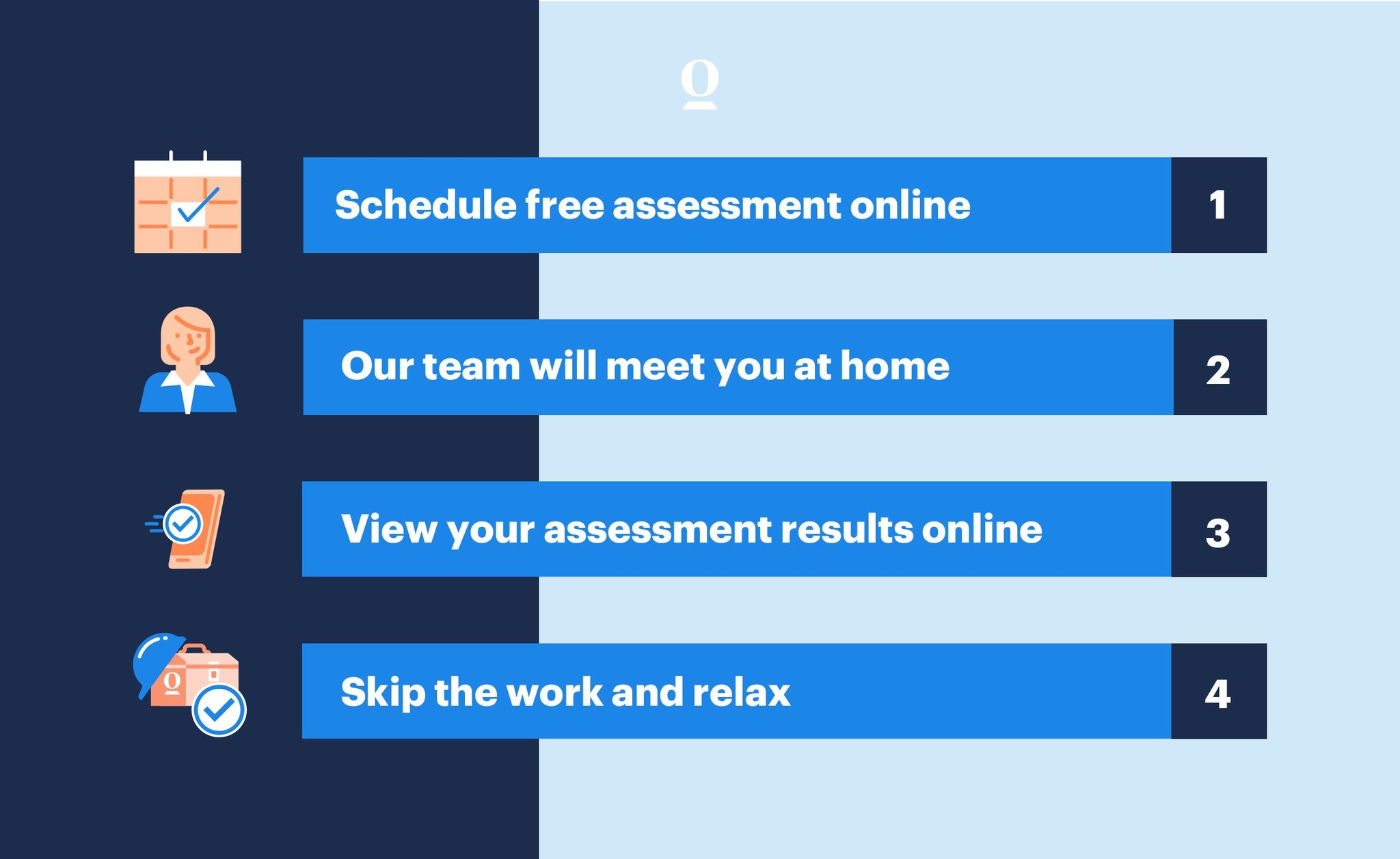
1. Schedule a free virtual assessment
If you like our offer for your home, we’ll work with you to schedule a free virtual assessment. We’ll have a video call so you can walk us through your home’s interior. After that, an Opendoor Estimator will assess the exterior of the home.
2. View your assessment results online
5-7 days after the assessment, we’ll let you know if repairs are needed. If they’re needed, we’ll ask for a credit and deduct the costs from your net proceeds. You’ll have the opportunity to review the amount with your Experience Partner. If you disagree with our repair asks or think it’s too high, you can cancel your contract with no penalty prior to closing.
3. Skip the work and relax
You get to relax and focus on your next home. We handle the repair work after you move out so you can skip the headache and move on your timeline.
What are we looking for during the home assessment?
We verify the home information you provided when you requested an offer, and we also look for items that are broken, in poor condition, or can affect the safety, structure, or functionality of the home.
We are not looking to charge you for upgrades. We’d ask for a repair to replace a cracked kitchen countertop. We would not ask for a repair to replace a Formica kitchen countertop with granite because that’s considered an upgrade.
Instead, examples of things we might look for include issues with the roof, windows, foundation, flooring, electrical, plumbing, HVAC (heating, ventilation, and a/c systems), and major appliances. Here’s a list of common repair items our Estimators find.
Get an offer with a click of a button
Sell your home directly to Opendoor, so you can skip all the hassle and months of uncertainty. Simply enter your address – and get our offer with a few simple steps.
Unlike a flipper who makes money buying homes “as is” and renovating heavily to mark up the price, we buy homes in good condition and try to make minor repairs.
Our business model is to make a competitive offer and charge a fee for our service. The service we provide is the certainty of an all-cash offer and the ability to move on your own timeline. We’re also dramatically simplifying the process for a better customer experience overall.
→ Curious about our business model? Learn how Opendoor makes money.

So what are the benefits of Opendoor’s simplified repair process?
You skip the hassle.
Avoid managing repairs like searching for contractors, managing timelines, doing the work yourself, and all the stress that goes with it.
We do the work. You think about repairs only once.
You don’t need to invest in repairs and prep work to get your home “show ready”, and you also avoid all the things that can go wrong when you manage repairs yourself. For example, there are often unforeseen costs that affect your wallet and timeline like a pipe bursting or a minor issue that uncovers something bigger.
With Opendoor, if there are unforeseen circumstances which result in additional repairs, we eat the extra costs. We don’t charge you after the fact. At this point, you’ve already moved into your next home.
No out-of-pocket costs.
If you sell the traditional way, you may find yourself paying for repair expenses out of your wallet, which can stress your finances at a time when you’re likely focused on buying your next home. We deduct repair costs from your net proceeds, not your pocket.
You’re in control.
You’ll know our repair ask and your estimated net proceeds before closing. If you change your mind or disagree with our repair request, you can walk away with no penalty prior to close.
What happens to your home after Opendoor buys it
The repair process most sellers care about doesn't happen pre-sale — it happens after Opendoor takes ownership. Understanding this back-half of the flow helps sellers see why the condition-adjustment math works the way it does and why pre-listing repairs are rarely worth the time.
From Opendoor's after-you-sell help article, the post-close renovation flow includes:
- Opendoor takes ownership at closing. Title transfers and Opendoor becomes responsible for the property immediately.
- Renovation work begins quickly. Typical work includes cosmetic updates, system repairs, roof work, kitchen and bathroom updates, and exterior improvements.
- Landscaping is maintained on a regular schedule during the renovation and listing periods.
- Utilities stay active. No need for the seller to keep paying utility bills after closing.
- The home is typically re-listed within a few weeks of closing once renovations are far enough along to photograph.
- Homes generally sell within a few months after renovation completes.
- Professional photography and staging are used for the resale. Opendoor doesn't ask the original seller to handle either.
For sellers, the practical takeaway is straightforward: don't repair before selling to Opendoor. Anything you'd fix yourself is already priced into the condition adjustment, and Opendoor's bulk-repair pricing often makes the math come out close to even — without you doing the work. For a side-by-side look at Opendoor's selling path vs. a traditional listing, see how selling to Opendoor compares to a traditional home sale.
Related: how selling to Opendoor compares to a traditional home sale.
How to prepare for your Opendoor home assessment
You don't need to repair or stage your home for the assessment, but a few small steps make the visit (or self-assessment) faster and more accurate. The goal is clear access to the systems Opendoor needs to evaluate so the condition-adjustment math is based on real condition rather than guesswork.
Four things to do before the assessment:
- Clear access to the major systems. Move boxes and stored items away from the HVAC, water heater, electrical panel, and any visible plumbing. The evaluator (or the Key App) needs unblocked photos of nameplates and date stamps to confirm age.
- Gather paperwork that proves recent work. Recent receipts for a new roof, new HVAC, new water heater, replaced windows, or major electrical work can lower the condition adjustment if the items would otherwise be flagged by age alone.
- Make sure utilities are on. HVAC needs power to test; water heaters need water and gas/electric; lights need to work for photos. If the home is vacant with utilities off, restore them before the visit.
- Have the Opendoor Key App installed and signed in if you're doing the self-assessment. The app guides each shot — gallery uploads and screenshots aren't accepted, per Opendoor's home-assessment help.
What you don't need to do: deep-clean, stage, declutter cosmetically, paint, or fix anything. The assessment is about condition, not presentation. Opendoor handles renovation after closing, so cosmetic effort spent pre-assessment is effort wasted. If your plans change, there's no penalty for canceling an assessment appointment — contact support at 888-352-7075 or support@opendoor.com to reschedule.
How condition adjustments are calculated
A condition adjustment is a line item that reduces the preliminary offer to account for repairs Opendoor expects to make after purchase. Not every home gets one — Opendoor's help notes that homes in strong condition may have a small or no condition adjustment line item per the condition-adjustment help article. Knowing which items most commonly trigger an adjustment helps you understand the math in advance.
Commonly flagged items, per Opendoor's condition-adjustment help:
- Roof nearing the end of useful life — 20+ years for asphalt shingles may result in full replacement.
- HVAC systems older than 15-20 years showing poor performance.
- Visible structural movement.
- Safety items missing (detectors, GFCI outlets, stair railings).
- Major cosmetic wear that affects resale photos (heavy carpet wear, dated kitchens, damaged drywall).
A few facts worth knowing about how the math works:
- Estimates are Opendoor's internal numbers, not contractor quotes. They reflect Opendoor's bulk repair pricing, which is often lower than retail contractor quotes — but the math is internal.
- You can dispute an adjustment. Contact support at 888-352-7075 or support@opendoor.com with documentation (recent receipts, contractor reports, age-verification paperwork). The condition-adjustment help article describes the dispute path.
- The adjustment is not a repair list you have to do. You sell as-is. Opendoor handles all repairs after closing.
For a deeper look at how Opendoor sets the preliminary offer before the adjustment, see how Opendoor calculates the value of your home.
Related: how Opendoor calculates the value of your home.
What the assessment actually evaluates (and what it doesn't)
Sellers often imagine the assessment as a full home inspection — it isn't quite that, and it isn't a casual walkthrough either. It's a structured review built around six categories that map closely to what a traditional buyer's inspector would flag, but it skips the moisture meters and intrusive testing a buyer's inspector might use.
The six categories Opendoor evaluates, per the home-assessment help article:
- Structural elements. Foundation visible movement, settled cracks, framing visible from the interior.
- Mechanical systems. HVAC age and operation, water heater age and condition, electrical panel, plumbing visible from sinks and exteriors.
- Roof. Shingle wear, visible age, gutters, flashing.
- Cosmetic condition. Paint, flooring, fixtures, kitchen and bath finishes.
- Safety items. Smoke and carbon-monoxide detectors, GFCI outlets, stair railings, water heater straps where required.
- Exterior. Siding, paint, driveways, landscaping, fences, deck condition.
Things the assessment generally does NOT include: chimney scoping, sewer line video inspection, radon testing, mold testing, pest inspection, or pool equipment teardown. Those services, if needed, happen during Opendoor's post-close renovation phase rather than before the offer is finalized. For a fuller view of how the assessment fits into Opendoor's overall selling flow, see Opendoor's how-it-works-sell page — our complete guide to how does opendoor work.
Getting started is easy
Start by requesting an offer, the process is simple and takes about ten minutes. After you tell us about your home online, our goal is to have a competitive, all-cash offer in your inbox in 24-48 hours (market dependent).
If you like the offer, you can then schedule the home condition assessment when it’s convenient for you. You’ll also have the opportunity to speak with a dedicated Opendoor Expert one-on-one. And if you’re working with a listing agent, then your agent will be your primary point of contact about our process and repairs. We respect the agent-client agreement.
Looking to sell a home in West Virginia? Opendoor makes selling simple in Southwest, Greensboro, and West Texas — request a free, no-obligation cash offer.


