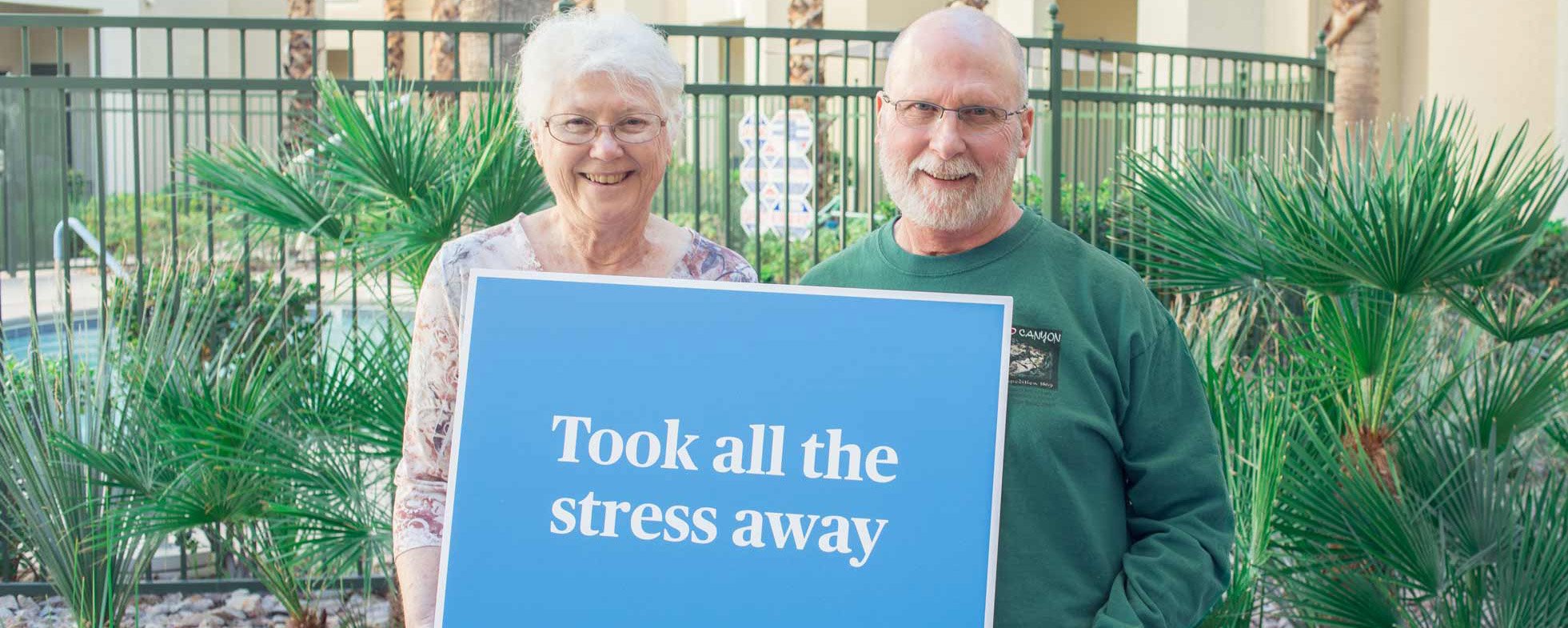

“To them it’s not about the sale, it’s about trying to help families move on. They treated me like I was their only client, and I had that one-on-one attention.”Read more about Charlisa Boyd
Charlisa Boyd
Sold to Opendoor in Raleigh, NC
Get an instant offer, choose your close date, skip repairs.

Skip the work with a cash offer from Opendoor.
Cash Now, More Later
Cash
“To them it’s not about the sale, it’s about trying to help families move on. They treated me like I was their only client, and I had that one-on-one attention.”Read more about Charlisa Boyd
Charlisa Boyd
Sold to Opendoor in Raleigh, NC

“Opendoor’s offer came in right near our appraisal, but we never had to list the house or do showings. For the kind of value Opendoor gives you, it’s just a no-brainer.”Read more about Adam Leon
Adam Leon
Sold to Opendoor in Phoenix, AZ
Calculate your mortgage with our free calculator. Get an estimate of your monthly payments, interest, and amortization.
Mortgage CalculatorEstimate the cost of selling and the net proceeds you could earn from the sale in less than 30 seconds. No commitment.
Home Sale CalculatorGet a free estimate with our home value estimator, then come back to compare it against a no-obligation Opendoor offer.
Selling to Opendoor:
Traditional listing:
Median 49 days to pending plus 30-45 days to close through Michigan title company. With 57.3% of Detroit homes selling below asking and 3.71 months of supply, buyers have leverage -- pricing accurately and presenting a condition-ready home is essential. Michigan RETT at $8.60 per $1,000 (0.86%, seller-paid) is a meaningful cost on higher-priced suburban homes.
Selling another Michigan home, or just over the state line? Opendoor buys homes across the region:
Michigan cities
- Warren
Nearby states
- Indiana
- Ohio
Selling a house in Detroit follows a clear process, but the steps look different depending on whether your home is in the city proper or in one of.
Michigan requires sellers to complete a mandatory disclosure form before any binding agreement is signed. Getting this right upfront is essential.
Seller's Disclosure Statement (SDS): Required under MCL 565.957 for residential properties. Must be delivered to the buyer before they sign a binding purchase agreement. Buyers who do not receive the SDS in time may have the right to terminate. The SDS covers structural and mechanical systems, known defects, water supply and sewer, environmental conditions, and any known insurance claims or lawsuits involving the property. Sellers complete it based on personal knowledge -- 'Unknown' is acceptable where the seller genuinely does not know. Lead-based paint disclosure is also required under federal law for homes built before 1978 (a significant portion of Detroit's housing stock). HOA documents must be provided if the property is governed by a homeowners association.
Michigan exemptions from the SDS requirement include transfers between spouses, parent-to-child or grandchild transfers, court-ordered transfers, estate and probate transfers, and arm's length sales where the sale price is at or below the seller's original purchase price. Your listing agent or title company can clarify which forms are required for your specific situation.
Selling a Detroit area home involves several cost categories. Here is what to budget for.
Agent commissions are typically the largest cost, ranging from 5-6% of the sale price. On a home at the city ZHVI of $75,358, that comes to roughly $3,768 to $4,522 -- but in suburban communities like Birmingham or Troy where median prices are $457,000 to $733,000, commissions on the same percentage represent $22,850 to $43,980. The Michigan Real Estate Transfer Tax is seller-paid: $7.50 per $1,000 for the state portion plus $1.10 per $1,000 for Wayne County = $8.60 per $1,000 total (0.86%). On a $200,000 sale this comes to $1,720. Sellers also typically pay for the owner's title insurance policy and title company closing fees, which together typically range from $1,500 to $2,500 depending on the transaction.
Pre-listing repairs can be a significant variable in Detroit, where the housing stock skews older. In a buyer's market where 57.3% of homes sell below asking, condition-compromised homes typically require either meaningful price concessions or pre-sale repairs. For a full breakdown of every line item, read our guide on how much it costs to sell a house.
Net proceeds are the amount you walk away with after every cost is subtracted. Here is the formula:
Net proceeds = sale price - mortgage payoff - closing costs - commissions - repairs/concessions
Using a $200,000 sale price as an example: if you owe $90,000 on your mortgage, pay 5.5% in commissions ($11,000), $1,720 in Michigan transfer tax, $1,500 in title and closing fees, and $3,000 in prorated property taxes, your estimated net proceeds would be around $92,780. In suburban markets with higher sale prices, the absolute dollar amounts scale proportionally. Use our net proceeds calculator to run the numbers for your specific home.
Michigan does not have a state income tax exclusion for home sale gains -- the federal primary residence exclusion ($250,000 single / $500,000 married, with 2-of-5-year residency requirement) applies at the federal level, and Michigan taxes gains at the state income tax rate of 4.25% above the federal exclusion. Consult a tax professional to understand your specific liability.
If you need to sell your Detroit area home quickly -- without repairs, showings, or waiting on buyer financing -- Opendoor makes cash offers on homes throughout the Detroit metro area. The process starts with a free online offer request. You will receive a preliminary offer within 24 hours, with no obligation to proceed.
Detroit's buyer's market makes the case for a cash offer more straightforward than in stronger markets. With 49 days to pending on the median, overpriced or condition-compromised homes can sit for months. Detroit's older housing stock also means many homes have deferred maintenance that buyers will flag in inspections, often leading to renegotiations or concessions. Opendoor purchases as-is, with no inspection renegotiations, so you know your net number from the start. Opendoor's flexible closing window (21 to 60+ days) lets you choose a closing date that works for your move.
Sellers choose Opendoor for the certainty: a firm cash price, no financing contingency, no open houses, and a closing date you control.
A cash sale makes the most sense when speed and certainty matter more than maximizing every dollar. If you are relocating out of Detroit, managing an estate sale, or dealing with a home that needs significant repairs before it can compete in a buyer's market where half the listings sell below asking, a cash offer lets you skip the prep, showings, and Michigan's SDS contingency process.
In Detroit's current market, 57.3% of homes sell below asking and the city ZHVI has declined 3.0% year-over-year. With 3.71 months of supply, well-priced and well-presented homes still close -- but the margin for error is narrow. For sellers where certainty matters more than optimizing the last dollar, selling for cash in Detroit is worth exploring. Learn more about how selling your house for cash works with Opendoor.
A cash offer is a bid to purchase a home without relying on mortgage financing, which typically means fewer contingencies and a faster path to closing. Sellers often consider cash offers because they can simplify the transaction, reduce the risk of financing fall-throughs, and shorten the overall timeline. If you're weighing your options, learning more about what a cash offer in real estate is and why to consider it can help you decide if this route makes sense for your situation.
The process is designed to streamline the selling experience, and most sellers can expect to close in as few as 21 days, though timelines may vary. Opendoor typically charges a service fee that is competitive with traditional real estate commission costs. For a broader look at how cash home sales work across the industry, Bankrate's guide to selling your house for cash is a helpful resource.
Selling a home in the Detroit area doesn't have to mean months of showings, navigating Michigan's SDS contingency rights, or competing for buyers in a market where more than half of homes sell below asking.
The process is designed to put you in control. Sellers can typically choose a closing date that works for their schedule, and because Opendoor handles much of the complexity behind the scenes, there are fewer surprises along the way.
When you're ready to see what Opendoor can offer for your Detroit area home, requesting your free, no-obligation offer is a simple place to start.
Detroit metro market at a glance (March 2026): City ZHVI $75,358 | Down 3.0% year-over-year | Days to pending: 49 | Months of supply: 3.71 | 57.3% of homes selling below asking | Market type: buyer's market
As of March 2026, the Zillow Home Value Index for Detroit city sits at $75,358, down 3.0% year-over-year. With 49 days to pending and 3.71 months of supply, Detroit is firmly in buyer's market territory by national metrics. More than half of homes -- 57.3% -- sell below their original asking price. These conditions mean sellers must price accurately from day one.
The metro bifurcation is one of the most extreme of any major US city. Birmingham (Oakland County) has a ZHVI of $733,351, up 5.5% year-over-year, while Grosse Pointe Park and Grosse Pointe both trade above $450,000. Troy, Dearborn, and Royal Oak represent the mid-tier suburban market. Detroit city itself, at $75,358, is among the most affordable large-city housing markets in the United States -- a dynamic that attracts investors and cash buyers but requires careful positioning for traditional sellers.
The tables below reflect closed home sales within Detroit city limits, drawn from Opendoor's first-party MLS data. They are more granular than the broader metro-level market summary above, so the monthly sale counts and medians shown here can differ from metro-wide figures.
From Opendoor first-party MLS data for Detroit, MI (through Jun 2026). Month-over-month (MoM) change is calculated on the median sale price.
| Month | Homes sold | Median sale price | MoM change | Median days on market | Sale-to-list |
|---|---|---|---|---|---|
| Jun 2025 | 500 | $115,000 | — | 61 | 98.7% |
| Jul 2025 | 462 | $108,000 | -6.1% | 62 | 99.5% |
| Aug 2025 | 514 | $117,000 | +8.3% | 64 | 97.9% |
| Sep 2025 | 473 | $97,000 | -17.1% | 60 | 96.9% |
| Oct 2025 | 512 | $95,500 | -1.5% | 66 | 96.5% |
| Nov 2025 | 400 | $95,000 | -0.5% | 63 | 96.4% |
| Dec 2025 | 478 | $100,000 | +5.3% | 74 | 99.2% |
| Jan 2026 | 427 | $95,000 | -5.0% | 78 | 97.0% |
| Feb 2026 | 431 | $82,000 | -13.7% | 77 | 96.2% |
| Mar 2026 | 412 | $110,000 | +34.1% | 78 | 96.5% |
| Apr 2026 | 439 | $105,000 | -4.5% | 64 | 97.1% |
| May 2026 | 438 | $100,000 | -4.8% | 65 | 96.6% |
| Jun 2026 | 440 | $107,950 | +8.0% | 66 | 97.7% |
Median days on market and sale price by Detroit ZIP code, Opendoor MLS data (last 6 months, ZIP codes with 25+ closed sales), sorted fastest first.
| ZIP code | Median days on market | Median sale price | Homes sold (6 mo) |
|---|---|---|---|
| 48201 | 49 | $450,000 | 27 |
| 48209 | 54 | $140,000 | 33 |
| 48228 | 59 | $75,000 | 233 |
| 48235 | 61 | $115,000 | 234 |
| 48205 | 63 | $62,550 | 172 |
| 48208 | 65 | $307,500 | 28 |
| 48223 | 65 | $110,000 | 81 |
| 48213 | 66 | $60,000 | 73 |
| 48219 | 68 | $101,000 | 227 |
| 48204 | 71 | $80,500 | 84 |
| 48221 | 71 | $178,900 | 205 |
| 48234 | 72 | $65,000 | 111 |
New listings versus homes sold each month, Opendoor MLS data for Detroit through Jun 2026. A sold-to-new ratio below 100% means inventory is building.
| Month | New listings | Homes sold | Sold-to-new ratio |
|---|---|---|---|
| Jun 2025 | 1,753 | 500 | 29% |
| Jul 2025 | 1,464 | 462 | 32% |
| Aug 2025 | 1,425 | 514 | 36% |
| Sep 2025 | 1,484 | 473 | 32% |
| Oct 2025 | 1,313 | 512 | 39% |
| Nov 2025 | 1,082 | 400 | 37% |
| Dec 2025 | 837 | 478 | 57% |
| Jan 2026 | 1,000 | 427 | 43% |
| Feb 2026 | 1,052 | 431 | 41% |
| Mar 2026 | 1,230 | 412 | 33% |
| Apr 2026 | 1,234 | 439 | 36% |
| May 2026 | 1,096 | 438 | 40% |
| Jun 2026 | 1,272 | 440 | 35% |
Detroit's economy is anchored by the largest concentration of automotive manufacturing employment in the Western Hemisphere. Ford Motor Company employs approximately 47,750 workers in the metro and opened the $950M Michigan Central Station mobility campus in Corktown in June 2024 -- a 30-acre development expected to house approximately 5,000 jobs in mobility technology, startups, and Ford's EV team. General Motors employs 34,454 workers and is the subject of a $1.6B Bedrock/GM Renaissance Center redevelopment project slated for 2027-2033. Stellantis employs 32,613 workers across Auburn Hills and Detroit facilities. Together, the Big Three directly employ over 115,000 metro workers.
Henry Ford Health is the second-largest metro employer at 45,640 workers, and the University of Michigan in Ann Arbor -- with 40,112 employees and top federal research funding -- anchors the western edge of the metro economy. Rocket Companies, Dan Gilbert's fintech and real estate enterprise headquartered in downtown Detroit, has been a central driver of the city's commercial revival. Detroit recorded its first consecutive years of population growth in 2023-2024 -- the first time in 66 years -- signaling a stabilization in the city's long decline.
Detroit's buyer's market means sellers must work harder than in more competitive metros. Homes at or above the city median benefit from careful pricing, strong presentation, and realistic expectations on timing -- 49 days to pending is the metro-wide median, and overpriced or condition-compromised homes routinely take longer. The revival story is real (Corktown, downtown investment, population stabilization), but it has not yet shifted the buyer-seller balance in most neighborhoods.
Michigan's Seller's Disclosure Statement (SDS) under MCL 565.957 requires honest disclosure of known defects before any binding agreement is signed. Sellers who complete the SDS thoroughly and proactively reduce the risk of buyers exercising termination rights after learning about issues. The Michigan Real Estate Transfer Tax at 0.86% of the sale price is a meaningful seller cost -- on a $200,000 city-priced home, that's $1,720, and on a $500,000 suburban home, $4,300. For sellers dealing with an older home, significant deferred maintenance, or a timeline that cannot accommodate Detroit's typical 50-90-day sale process, Opendoor's as-is cash purchase is worth comparing against a net proceeds estimate from a traditional listing.
Spring (March through June) is traditionally the strongest selling season in Detroit, as buyers emerge from the harsh Michigan winter and the school year transition motivates families to move. how to sell your house for the most money. Sellers who need flexibility can request a cash offer from Opendoor any time of year.
On the traditional market, the timeline from listing to closing in Detroit generally ranges from 60 to 90 days. The median days to pending is 49 -- homes in the city typically wait 7 weeks or more before finding an accepted offer. how long does it take to sell a house.
Detroit seller closing costs typically range from 7% to 10% of the sale price including agent commissions and Michigan's transfer tax. On a home at the $75,358 city ZHVI median, total costs might run $5,300 to $7,500. how much does it cost to sell a house.
At the federal level, the primary residence exclusion -- $250,000 for single filers or $500,000 for married couples filing jointly -- applies to capital gains if you've lived in the home as your primary residence for at least two of the last five years.
No. Michigan is not a mandatory attorney state for residential real estate closings. Transactions are handled by licensed title companies, which manage document preparation, fund disbursement, deed recording, and title transfer.
The Michigan Real Estate Transfer Tax (RETT) is a tax on the transfer of real property, paid by the seller at closing.
Michigan requires sellers to deliver a completed Seller's Disclosure Statement (SDS) under MCL 565.957 before the buyer signs a binding purchase agreement.
The Neighborhood Enterprise Zone (NEZ) Homestead program is a Michigan tax incentive that allows qualified buyers in designated Detroit neighborhoods to receive significantly reduced property taxes for up to 15 years.
The fastest traditional route in Detroit's buyer's market is to price at or slightly below current neighborhood comps, complete the SDS upfront before listing, address obvious deferred maintenance that will appear on inspection reports, and use professional. how to sell your house fast -- complete guide.
Yes, you can sell your Detroit home as-is, signaling to buyers that you will not make repairs or offer credits for inspection findings.
A cash offer means the buyer has the funds available to purchase your home without relying on a mortgage, eliminating the financing contingency and the risk of a loan falling through. what is a cash offer in real estate and why consider it.
The percentage varies significantly by buyer type. Traditional investors and 'We Buy Houses' companies typically offer 50% to 70% of market value because their model relies on reselling at a profit after renovations.