↘ 7%
325
New listings
This week
Get an instant offer, choose your close date, skip repairs.
Data from the last 28 days for the Riverside metro.
↘ 7%
325
New listings
This week
↗ 5%
3,623
Homes on market
Currently active
↘ 51%
99
Homes delisted
This week
↘ 19%
195
Homes sold
This week
Last updated on October 12, 2026
Skip the work with a cash offer from Opendoor.
Cash Now, More Later
Cash
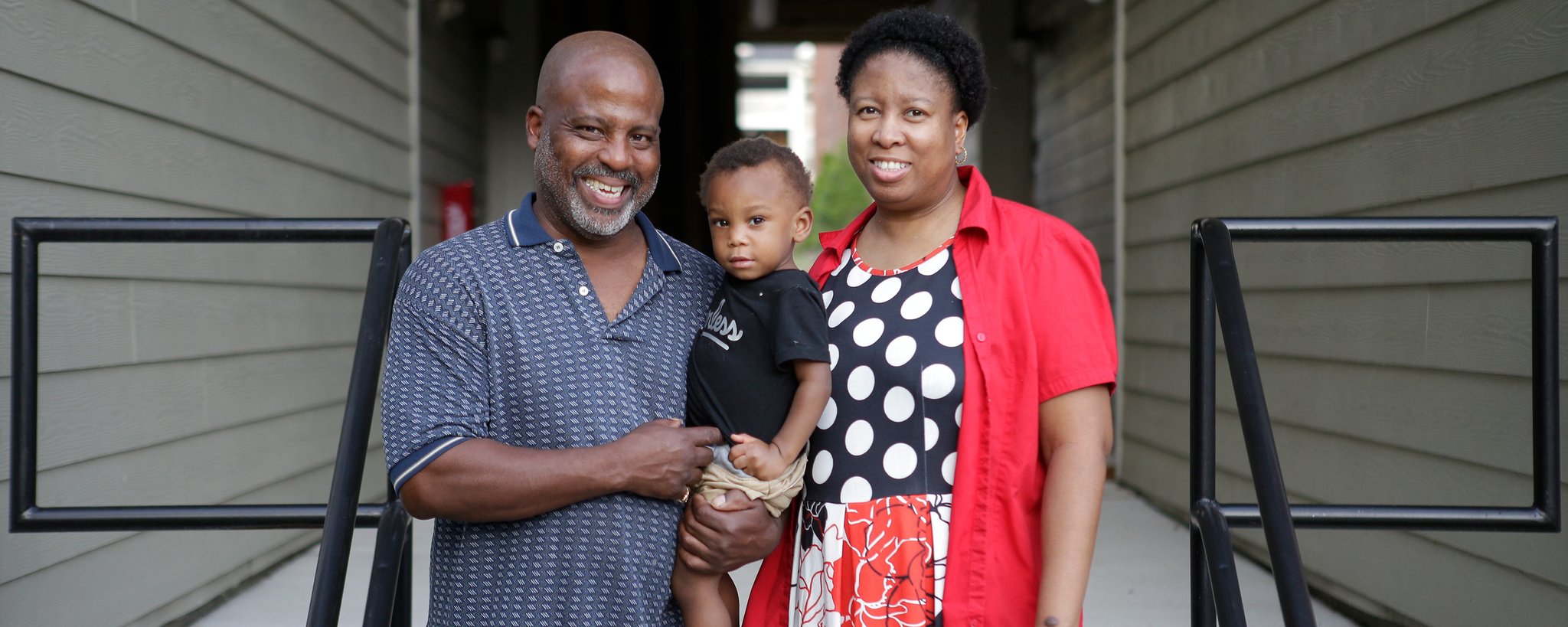
“To them it’s not about the sale, it’s about trying to help families move on. They treated me like I was their only client, and I had that one-on-one attention.”Read more about Charlisa Boyd
Charlisa Boyd
Sold to Opendoor in Raleigh, NC

“Opendoor’s offer came in right near our appraisal, but we never had to list the house or do showings. For the kind of value Opendoor gives you, it’s just a no-brainer.”Read more about Adam Leon
Adam Leon
Sold to Opendoor in Phoenix, AZ
Also looking to buy? Browse homes for sale in Riverside.
Calculate your mortgage with our free calculator. Get an estimate of your monthly payments, interest, and amortization.
Mortgage CalculatorEstimate the cost of selling and the net proceeds you could earn from the sale in less than 30 seconds. No commitment.
Home Sale CalculatorGet a free estimate with our home value estimator, then come back to compare it against a no-obligation Opendoor offer.
Selling to Opendoor:
Traditional listing:
Riverside homes typically go under contract within 20-35 days, followed by a 30-45 day California escrow. Riverside County transfer tax is $1.10 per $1,000, and the mandatory CA Transfer Disclosure Statement (TDS) must be prepared before listing. Inland Empire competition and softening values (Riverside County median down 2.4% YoY in early 2026) require accurate pricing from day one.
Selling another California home, or just over the state line? Opendoor buys homes across the region:
California cities
- Anaheim
- Concord
- Folsom
- Fresno
- Modesto
- Ontario
- Orange
- Rocklin
- Stockton
- Temecula
Nearby states
- Arizona
- Nevada
- Oregon
Riverside sellers need: the Transfer Disclosure Statement (TDS, Civil Code Section 1102) - personally completed by the seller disclosing all known material defects; the Natural Hazard Disclosure report (NHD, Civil Code Section 1103) - ordered from a licensed third-party NHD company covering fire hazard severity zones, flood zones, earthquake fault zones, seismic hazard zones (liquefaction and landslide), and Very High Fire Hazard Severity Zone designation; your deed; a preliminary title report (ordered through escrow); HOA governing documents and resale certificate (if the property is in an HOA); a mortgage payoff statement; recent utility bills; and permits and approvals for any additions, conversions, or renovations. California law requires the TDS to be delivered to the buyer as soon as practicable before transfer - if delivered after contract ratification, the buyer has 3 days (5 days if mailed) to cancel the contract without penalty. Riverside County properties may also require documentation of unpermitted additions if the county's permit records show discrepancies with the home's actual square footage.
Riverside sellers pay California's documentary transfer tax at closing. Riverside County charges $1.10 per $1,000 of sale price (0.11%). The City of Riverside does not impose a separate city-level documentary transfer tax, so sellers within Riverside city limits pay only the county rate - a meaningful advantage compared to cities like Sacramento (which adds a $2.75 per $1,000 city tax) or Los Angeles (which adds significant city transfer taxes on higher-value properties). On Riverside's median home value of approximately $695,000, the county transfer tax runs approximately $765.
Total seller closing costs in Riverside typically run 7-9% of sale price: agent commissions (5-6%), escrow fees (seller share, approximately $1,500-$2,500), owner's title insurance (~$1,000-$2,000), Riverside County documentary transfer tax (~0.11%), NHD report (~$150-$200), and property tax proration (California taxes paid in two installments, proration calculated through the close date). At the $695K median, total seller costs run approximately $48,650-$62,550 before mortgage payoff - with agent commissions comprising the majority. Use Opendoor's home sale calculator to estimate your specific net proceeds.
Net proceeds are the amount you walk away with after every cost is subtracted. Here is the formula:
Net proceeds = sale price - mortgage payoff - closing costs - commissions - repairs/concessions
Using Riverside's median home value of approximately $695,000 as an example: if you owe $420,000 on your mortgage, pay 5.5% agent commissions ($38,225), escrow fees ($2,000), owner's title insurance ($1,500), Riverside County documentary transfer tax at $1.10 per $1,000 ($765), an NHD report ($175), property tax proration ($2,200), and miscellaneous closing costs ($500), your estimated net proceeds would be approximately $229,635. Because Riverside does not impose a city-level transfer tax, sellers here pay lower transfer-related costs than in many other California cities. California's capital gains exclusion - $250,000 for single filers, $500,000 for married couples filing jointly - may apply if you have owned and occupied the home for at least 2 of the last 5 years. Use our home sale calculator to run the numbers for your specific situation.
Riverside has an active cash buyer market driven by investor activity in older city neighborhoods, military-adjacent relocation from March Air Reserve Base, estate sales, and Inland Empire logistics workers seeking to trade up or downsize. Cash buyers are active across Riverside County, particularly for homes in the $500K-$750K range where the logistics workforce and healthcare employees from Kaiser Permanente and Riverside University Health System represent the core buyer pool.
Opendoor provides a competitive, data-driven cash offer for Riverside homes with a flexible 21-60+ day closing timeline. Selling to Opendoor means skipping California's complex TDS and NHD preparation process on the buyer side - Opendoor conducts its own due diligence and you close through a standard California escrow. In a market where values have appreciated 107% over the past decade, an Opendoor offer reflects current Inland Empire market data, not 2022 peak pricing or a lowball investor offer. Sell your Riverside house fast for cash with Opendoor.
Selling a home in Riverside involves California-specific requirements - the mandatory Transfer Disclosure Statement, Natural Hazard Disclosure, and escrow-based closing process - but one significant seller advantage: the City of Riverside imposes no city-level transfer tax, so sellers pay only Riverside County's $1.10 per $1,000 rate. Opendoor simplifies the process further - receive a cash offer, choose your closing date, and Opendoor coordinates the full escrow and title process.
Opendoor makes selling your Riverside home simple - no listings, no showings, and no buyer financing contingencies. Learn more about how a cash offer works.
Opendoor's service fee is competitive with traditional agent commissions. You avoid the cost of repairs, staging, showings, and months of market uncertainty. Opendoor handles the California TDS and escrow process on its side - you skip the disclosure preparation and multi-week escrow wait.
Riverside's housing market reflects the broader Inland Empire story in 2026 - a decade of exceptional appreciation (107% over 10 years, averaging 7.55% annually per NeighborhoodScout) followed by a modest cooling period.
The economic foundation in Riverside is deep and diverse. The County of Riverside is the single largest employer with nearly 24,400 employees. UC Riverside - one of the fastest-growing UC campuses with 26,000+ students - generates sustained demand in the University and Canyon Crest neighborhoods.
For Riverside sellers who want a defined outcome - whether facing a relocation deadline, an estate situation, or simply wanting to skip California's complex disclosure requirements and multi-week escrow process - Opendoor's cash offer provides certainty.
Riverside's housing market is moderating as of early 2026 after a decade of exceptional growth. The median home value in Riverside is approximately $695,072 (NeighborhoodScout, 2025), representing +2.59% appreciation over the past 12 months and a 10-year cumulative gain of approximately 107%. At the county level, the California Association of REALTORS reported a Riverside County median sold price of $631,000 in February 2026, down 2.4% YoY but with transaction volume rising 20.4% month-over-month - suggesting buyers are returning as the market stabilizes from its post-pandemic peak.
Price variation across Riverside's neighborhoods is significant. Hawarden Hills averages $899,619 - the city's highest-value neighborhood - driven by its hillside estate lots and proximity to Box Springs Mountain. Wood Streets ($806,591) and La Sierra ($817,223) command premium values for their tree-canopied streets and established community feel. Mission Grove ($782,137) and Orangecrest ($722,820) draw families seeking newer construction in eastern Riverside. Canyon Crest ($721,679), adjacent to UC Riverside, benefits from university proximity and professional demographics. More affordable entry points exist in Northside ($694,159), Victoria ($641,864), and Arlington ($517,448), which absorb first-time buyers and logistics-sector workers.
The tables below reflect closed home sales within Riverside city limits, drawn from Opendoor's first-party MLS data. They are more granular than the broader metro-level market summary above, so the monthly sale counts and medians shown here can differ from metro-wide figures.
From Opendoor first-party MLS data for Riverside, CA (through Jun 2026). Month-over-month (MoM) change is calculated on the median sale price.
| Month | Homes sold | Median sale price | MoM change | Median days on market | Sale-to-list |
|---|---|---|---|---|---|
| Jun 2025 | 218 | $661,500 | — | 69 | 100.0% |
| Jul 2025 | 223 | $650,000 | -1.7% | 73 | 100.0% |
| Aug 2025 | 218 | $647,000 | -0.5% | 74 | 100.0% |
| Sep 2025 | 221 | $640,000 | -1.1% | 64 | 100.0% |
| Oct 2025 | 253 | $650,000 | +1.6% | 71 | 100.0% |
| Nov 2025 | 184 | $672,450 | +3.5% | 78 | 100.0% |
| Dec 2025 | 209 | $649,900 | -3.4% | 80 | 100.0% |
| Jan 2026 | 147 | $665,000 | +2.3% | 83 | 100.0% |
| Feb 2026 | 170 | $650,000 | -2.3% | 87 | 100.0% |
| Mar 2026 | 202 | $642,500 | -1.2% | 67 | 100.0% |
| Apr 2026 | 224 | $632,500 | -1.6% | 57 | 100.0% |
| May 2026 | 205 | $675,000 | +6.7% | 63 | 100.0% |
| Jun 2026 | 236 | $650,000 | -3.7% | 60 | 100.0% |
Median days on market and sale price by Riverside ZIP code, Opendoor MLS data (last 6 months, ZIP codes with 25+ closed sales), sorted fastest first.
| ZIP code | Median days on market | Median sale price | Homes sold (6 mo) |
|---|---|---|---|
| 92506 | 59 | $725,000 | 202 |
| 92505 | 63 | $650,000 | 117 |
| 92504 | 63 | $606,000 | 166 |
| 92507 | 67 | $595,000 | 165 |
| 92508 | 68 | $740,000 | 161 |
| 92503 | 75 | $627,000 | 310 |
| 92501 | 78 | $563,500 | 63 |
New listings versus homes sold each month, Opendoor MLS data for Riverside through Jun 2026. A sold-to-new ratio below 100% means inventory is building.
| Month | New listings | Homes sold | Sold-to-new ratio |
|---|---|---|---|
| Jun 2025 | 344 | 218 | 63% |
| Jul 2025 | 352 | 223 | 63% |
| Aug 2025 | 315 | 218 | 69% |
| Sep 2025 | 290 | 221 | 76% |
| Oct 2025 | 295 | 253 | 86% |
| Nov 2025 | 178 | 184 | 103% |
| Dec 2025 | 171 | 209 | 122% |
| Jan 2026 | 269 | 147 | 55% |
| Feb 2026 | 236 | 170 | 72% |
| Mar 2026 | 296 | 202 | 68% |
| Apr 2026 | 356 | 224 | 63% |
| May 2026 | 305 | 205 | 67% |
| Jun 2026 | 256 | 236 | 92% |
Riverside functions as both the county seat and the civic core of the Inland Empire, one of the fastest-growing economic regions in California. The city's largest employer is the County of Riverside itself (24,399 employees), followed by March Air Reserve Base (9,750 military and civilian personnel) - home to the 452nd Air Mobility Wing and Fourth Air Force headquarters. UC Riverside (8,831 employees, 26,000+ students) is one of the most rapidly expanding UC campuses and is recognized nationally for social mobility outcomes. Kaiser Permanente employs 7,610 in the region, and Riverside Unified School District adds 4,505 education jobs.
Beyond these anchor employers, the Inland Empire's logistics revolution has reshaped employment in and around Riverside. The region now hosts more warehouse and distribution square footage than almost any other metro in the United States - Amazon, UPS, FedEx, BNSF Railway, and hundreds of 3PL operators have built out a massive network of fulfillment centers extending from Riverside east through San Bernardino. This logistics employment base - ranging from entry-level fulfillment roles to management and technology positions - creates a broad, sustained workforce that generates housing demand across Riverside's entire price spectrum, from Arlington starter homes to Hawarden Hills executive estates.
Riverside's combination of anchor institutional employers - county government, a major UC campus, and a military reserve base - with a broad private-sector logistics workforce creates a buyer pool that is both large and resilient across economic cycles. County and university employees have stable income and long tenure; logistics employment, while more cyclical, has proven durable given the structural shift toward e-commerce. The result is consistent transaction volume even when mortgage rates are elevated.
For sellers, Riverside's 107% 10-year appreciation means most long-term owners have substantial equity - often $200,000-$400,000+ in homes purchased before 2018. That equity cushion gives sellers flexibility on pricing, carrying costs, and timing. California's mandatory TDS and NHD disclosures add preparation steps to a traditional listing, but Riverside's favorable transfer tax position (county rate only, no city surcharge) keeps closing costs lower than in comparable California cities. Sellers who need certainty on timing or net proceeds - whether for a relocation, estate settlement, or move-up purchase - benefit from Opendoor's defined offer and flexible closing date.
Spring (March-May) is Riverside's strongest selling season - families target closings before the school year ends, and Riverside's Southern California weather makes spring listings show well year-round. Opendoor purchases Riverside homes year-round with no seasonal adjustment to the offer process. Learn more about the best time to sell a house.
In Riverside's 2025-2026 market, correctly priced homes typically go under contract within 20-35 days of listing, followed by a 30-45 day California escrow period - approximately 50-80 days from listing to close. With Opendoor, you receive a cash offer within 24 hours and can close in as little as 21 days or up to 60+ days on your schedule. Learn more about how long it takes to sell a house.
The fastest path is a cash offer from a direct buyer like Opendoor - you skip the TDS and NHD preparation process for buyer-side disclosure, the days-on-market wait, and California's 30-45 day escrow. See our complete guide on how to sell your house fast.
Riverside sellers typically pay 7-9% of sale price in total closing costs: agent commissions (5-6%), escrow fees (seller share, approximately $1,500-$2,500), owner's title insurance (~$1,000-$2,000), Riverside County documentary transfer tax ($1.10 per. For a full breakdown, see our guide on how much it costs to sell a house.
FSBO is legal in California. You handle marketing, showings, and price negotiation yourself; a licensed California escrow company handles the closing (title search, document preparation, fund disbursement, transfer tax remittance, and recording). Opendoor is a direct buyer - no listing agent required. The transaction closes through a licensed California escrow company. See our guide on selling without a realtor.
California requires more seller documentation than almost any other state. See our complete guide on how to sell your house.
At closing, Riverside sellers pay the Riverside County documentary transfer tax of $1.10 per $1,000 of sale price (approximately $765 on the $695K median). The City of Riverside does not add a city-level transfer tax. For a full breakdown of selling costs and taxes, see our guide on how much it costs to sell a house.
California mandates two disclosure forms for virtually all residential sales. Both disclosures must be delivered to the buyer before contract ratification. Delivery after signing gives the buyer a 3-day (5-day if mailed) right to cancel. See our guide on how to sell your house.
Start with recent closed sales (not list prices) in your specific Riverside neighborhood - the range from Arlington ($517K average) to Hawarden Hills ($899K average) means city-wide averages are not useful for individual pricing. See our guide on factors that influence home value.
A traditional Riverside listing involves 1-2 weeks of TDS and NHD disclosure preparation, 20-35 days to contract, and 30-45 days to close through California escrow - approximately 65-95 days total. Opendoor's cash offer reflects current Inland Empire market data with a transparent service fee. You skip buyer contingencies, the multi-week escrow wait, and California's disclosure preparation on the buyer side. comparison guide.
For most Riverside sellers, 2026 presents a window of genuine opportunity - the city's 107% 10-year appreciation means long-term owners hold substantial equity, and the Inland Empire's logistics-driven employment base continues to generate buyer demand. For sellers who need certainty on timing or net proceeds, Opendoor's cash offer removes the pricing risk entirely. Learn more about the best time to sell a house.
Riverside home values are driven by neighborhood location (proximity to UC Riverside, the historic downtown, or hillside views vs. industrial corridors), lot size and topography (Hawarden Hills hillside lots command $899K averages vs. See our guide on factors that influence home value.