↘ 5%
784
New listings
This week
Get an instant offer, choose your close date, skip repairs.

Data from the last 28 days for the Miami metro.
↘ 5%
784
New listings
This week
↗ 0%
18,076
Homes on market
Currently active
↘ 0%
362
Homes delisted
This week
↘ 16%
386
Homes sold
This week
Last updated on September 28, 2026
Skip the work with a cash offer from Opendoor.
Cash Now, More Later
Cash
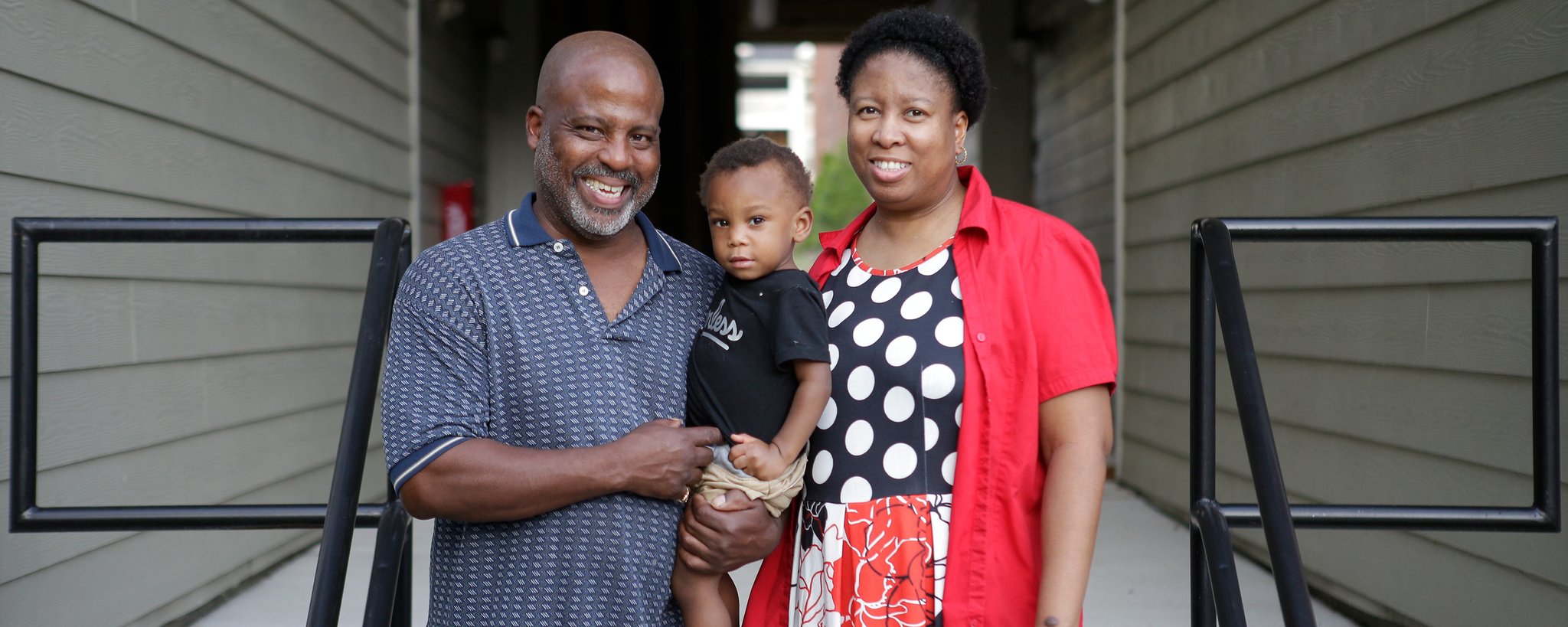
“To them it’s not about the sale, it’s about trying to help families move on. They treated me like I was their only client, and I had that one-on-one attention.”Read more about Charlisa Boyd
Charlisa Boyd
Sold to Opendoor in Raleigh, NC

“Opendoor’s offer came in right near our appraisal, but we never had to list the house or do showings. For the kind of value Opendoor gives you, it’s just a no-brainer.”Read more about Adam Leon
Adam Leon
Sold to Opendoor in Phoenix, AZ
Also looking to buy? Browse homes for sale in Miami Fl.
Calculate your mortgage with our free calculator. Get an estimate of your monthly payments, interest, and amortization.
Mortgage CalculatorEstimate the cost of selling and the net proceeds you could earn from the sale in less than 30 seconds. No commitment.
Home Sale CalculatorGet a free estimate with our home value estimator, then come back to compare it against a no-obligation Opendoor offer.
Selling to Opendoor:
Traditional listing:
Single-family homes average 76 days list-to-close in Miami-Dade (March 2025 MIAMI REALTORS). Condos average 100 days. With inventory up 40-43% YoY and sale-to-list ratios at 94-96%, buyers are negotiating. Miami's documentary stamp tax ($0.60 per $100 in Miami-Dade for single-family) is paid at closing. The main cost comparison is Opendoor's service fee vs. agent commissions plus carrying costs during a 2-3 month listing process.
Selling another Florida home, or just over the state line? Opendoor buys homes across the region:
Florida cities
- Brandon
- Holiday
- Lakeland
- Largo
- Miramar
- Orlando
- Tampa
Nearby states
- Alabama
- Georgia
Miami sellers need: your deed (the title company will verify and transfer), written disclosure of any known material defects (required under Florida common law even without a standardized form), title documents (the title company orders the title search), an HOA estoppel certificate (if applicable - required by Florida law and issued by the HOA within 10 business days), mortgage payoff statement, any permits for additions or renovations, condo association financials and meeting minutes (if selling a condo - particularly important given Florida's new structural inspection and reserve requirements for buildings 3 stories or taller), and government-issued ID for closing. The title company coordinates the full documentation package.
Florida's documentary stamp tax on deeds is paid at recording and applies to all parties. In Miami-Dade County, the rate is $0.60 per $100 of sale price on single-family homes (other Florida counties pay $0.70 per $100). For a $670,000 Miami single-family sale, the doc stamp tax on the deed is approximately $4,020 - by custom often split between buyer and seller or negotiated in the purchase contract, though statute makes all parties liable.
Total seller closing costs in Miami typically run 6-9% of sale price: agent commissions (5-6%), title insurance and fees (seller's portion, approximately $1,200-$2,500 on a $670K sale), documentary stamp taxes (approximately $4,020 for SFR), recording fees (~$200-$300), and property tax proration (Florida taxes paid in arrears). Hurricane wind insurance - a separate policy in South Florida - is a carrying cost to account for while your home is on the market. At Miami's $670K single-family median, total seller costs run approximately $40,000-$60,000. Use Opendoor's home sale calculator to estimate your specific net proceeds.
Net proceeds are the amount you walk away with after every cost is subtracted. Here is the formula:
Net proceeds = sale price - mortgage payoff - closing costs - commissions - repairs/concessions
Using Miami's $670,000 single-family median as an example: if you owe $380,000 on your mortgage, pay 5.5% agent commissions ($36,850), documentary stamp tax ($4,020), title fees ($1,800), recording fees ($250), property tax proration ($3,500), and miscellaneous closing costs ($500), your estimated net proceeds would be approximately $243,080. Florida has no state income tax, so you keep your full proceeds minus any federal capital gains liability. Use our home sale calculator to run the numbers for your specific situation.
Miami is one of the highest cash buyer markets in the United States. Per MIAMI REALTORS data (March 2025), 23.5% of single-family home sales and 52.3% of condo sales in Miami-Dade close in cash. This reflects the market's deep pool of international buyers - primarily from Latin America, Europe, and the Caribbean - and real estate investors who view Miami as a global asset.
Opendoor provides a competitive, data-driven cash offer for Miami homes with a flexible 21-60+ day closing timeline. In a market where single-family home inventory has risen 40.6% YoY and the sale-to-list ratio has dipped to 96%, an Opendoor cash offer provides a known net proceeds figure from day one - no buyer contingencies, no price reductions after inspection, no uncertainty about buyer financing.
Selling a home in Miami involves Florida-specific requirements including a common-law disclosure obligation, documentary stamp taxes at closing, and a title company closing process. Miami's international buyer pool and high cash transaction rate make it a unique market. Opendoor simplifies the process - receive a cash offer, choose your closing date, and Opendoor coordinates the full title and closing process. No listings, no showings, no uncertainty.
Opendoor makes selling your Miami home simple - no listings, no showings, and no buyer financing contingencies. Learn more about how a cash offer works.
Opendoor's service fee is competitive with traditional agent commissions. You avoid the cost of repairs, staging, showings, and months of market uncertainty. Opendoor works with a licensed Florida title company to close your transaction and handle all closing documentation including documentary stamp taxes, title transfer, and recording.
Miami's housing market has diverged sharply by property type in 2025. Single-family homes are holding firm at $670,000 median with 6.0 months of supply - a balanced market - while condos have moved into deep buyer's market territory: 13.2 months of supply, median prices down 1.7% YoY, and 100 days average to close. If you are selling a condo, especially in a building facing Florida's new structural inspection and reserve requirements, market timing and certainty matter significantly.
Miami's economic foundation is genuinely global. American Airlines operates its primary Latin American and Caribbean hub at Miami International Airport, Carnival Corporation's operational headquarters are in Doral, Baptist Health South Florida employs approximately 23,000 across 11 hospitals, and the University of Miami - headquartered in Coral Gables with 21,698 employees - is the second-largest employer in Miami-Dade County. International finance, trade, and tourism collectively make Miami one of the most economically diverse metros in the US.
For sellers in the current market, the challenge is certainty. A traditional listing in Miami-Dade averages 39 days to contract plus 37 days to close for single-family homes - 76 days total. Condos average 100 days from list to close. With inventory up 40-43% YoY across both property types, buyers have leverage. An Opendoor cash offer eliminates buyer contingencies, inspection-repair negotiations, and the two-to-three month uncertainty of a traditional listing process.
Miami-Dade's housing market has bifurcated in 2025. The MIAMI REALTORS March 2025 data shows single-family homes at a $670,000 median sale price (+3.1% YoY) with 6.0 months of supply - a balanced market with the sale-to-list ratio holding at 96%. Condos tell a different story: median sale price of $437,450 (-1.7% YoY), 13.2 months of supply, and a sale-to-list ratio of 94%. Inventory has risen 40.6% YoY for single-family and 43.5% for condos.
Miami's condo market faces a structural headwind specific to Florida: Senate Bill 4-D (2022) requires buildings three stories or taller to complete milestone structural inspections and fund reserves for repairs. Many older condo buildings - particularly in South Beach, Brickell, and Aventura - are levying special assessments on unit owners to meet these requirements, which affects both seller net proceeds and buyer appetite. Single-family suburban markets in Doral, Hialeah, Coral Gables, and Homestead are insulated from this dynamic and continue to see modest appreciation.
The tables below reflect closed home sales within Miami city limits, drawn from Opendoor's first-party MLS data. They are more granular than the broader metro-level market summary above, so the monthly sale counts and medians shown here can differ from metro-wide figures.
From Opendoor first-party MLS data for Miami, FL (through Jun 2026). Month-over-month (MoM) change is calculated on the median sale price.
| Month | Homes sold | Median sale price | MoM change | Median days on market | Sale-to-list |
|---|---|---|---|---|---|
| Jun 2025 | 955 | $607,000 | — | 91 | 96.5% |
| Jul 2025 | 929 | $550,000 | -9.4% | 93 | 96.5% |
| Aug 2025 | 930 | $575,000 | +4.5% | 97 | 96.2% |
| Sep 2025 | 993 | $565,000 | -1.7% | 97 | 96.3% |
| Oct 2025 | 1037 | $570,000 | +0.9% | 97 | 96.2% |
| Nov 2025 | 814 | $578,500 | +1.5% | 98 | 96.3% |
| Dec 2025 | 1051 | $550,000 | -4.9% | 91 | 96.2% |
| Jan 2026 | 753 | $575,000 | +4.5% | 107 | 96.0% |
| Feb 2026 | 860 | $580,000 | +0.9% | 99 | 96.3% |
| Mar 2026 | 1167 | $600,000 | +3.4% | 90 | 96.5% |
| Apr 2026 | 1121 | $580,000 | -3.3% | 90 | 96.3% |
| May 2026 | 1047 | $565,000 | -2.6% | 89 | 96.7% |
| Jun 2026 | 1058 | $600,000 | +6.2% | 93 | 96.7% |
Median days on market and sale price by Miami ZIP code, Opendoor MLS data (last 6 months, ZIP codes with 25+ closed sales), sorted fastest first.
| ZIP code | Median days on market | Median sale price | Homes sold (6 mo) |
|---|---|---|---|
| 33184 | 64 | $595,000 | 54 |
| 33165 | 67 | $706,000 | 148 |
| 33186 | 70 | $535,000 | 275 |
| 33142 | 74 | $468,700 | 128 |
| 33147 | 75 | $475,000 | 153 |
| 33173 | 75 | $577,789 | 154 |
| 33176 | 76 | $594,500 | 220 |
| 33193 | 76 | $520,000 | 141 |
| 33183 | 77 | $379,000 | 133 |
| 33175 | 79 | $670,000 | 163 |
| 33145 | 82 | $785,000 | 147 |
| 33156 | 82 | $442,000 | 81 |
New listings versus homes sold each month, Opendoor MLS data for Miami through Jun 2026. A sold-to-new ratio below 100% means inventory is building.
| Month | New listings | Homes sold | Sold-to-new ratio |
|---|---|---|---|
| Jun 2025 | 2,158 | 955 | 44% |
| Jul 2025 | 2,123 | 929 | 44% |
| Aug 2025 | 2,094 | 930 | 44% |
| Sep 2025 | 2,131 | 993 | 47% |
| Oct 2025 | 2,253 | 1037 | 46% |
| Nov 2025 | 1,841 | 814 | 44% |
| Dec 2025 | 1,629 | 1051 | 65% |
| Jan 2026 | 2,453 | 753 | 31% |
| Feb 2026 | 2,265 | 860 | 38% |
| Mar 2026 | 2,246 | 1167 | 52% |
| Apr 2026 | 2,162 | 1121 | 52% |
| May 2026 | 2,000 | 1047 | 52% |
| Jun 2026 | 1,964 | 1058 | 54% |
Miami's economy is anchored by international finance, trade, healthcare, and transportation. American Airlines operates its primary Latin American and Caribbean hub at Miami International Airport (MIA), one of the busiest international airports in the US. Carnival Corporation - the world's largest cruise company with 101,000 employees - has its operational headquarters in Doral, Miami-Dade County. PortMiami is the world's busiest cruise port by passenger traffic and one of the top cargo ports in the eastern US.
Healthcare is a major employment sector. Baptist Health South Florida (approximately 23,000 employees, HQ in Coral Gables), Jackson Health System (2,106 beds across multiple Miami-Dade facilities), and the University of Miami Health System together employ tens of thousands. The University of Miami itself - with 21,698 employees and a $6.6 billion annual budget - ranks 64th among national universities. Ryder System (50,700 employees, HQ in Coral Gables) represents the logistics and supply chain sector. Florida's lack of a state income tax continues to attract corporate relocations, particularly from New York and California, adding technology and financial services employment to the metro.
Single-family sellers in Miami's suburban markets - Doral, Coral Gables, Hialeah, Homestead - are in a balanced market with prices still appreciating modestly. Correct pricing and condition matter: with the sale-to-list ratio at 96%, buyers are negotiating 4% discounts on average, and a well-priced home still moves in approximately 39 days to contract.
Condo sellers face a more challenging environment. With 13.2 months of supply and prices down 1.7% YoY, the condo market clearly favors buyers. For condo owners in buildings with pending special assessments under Florida's new structural inspection laws, the calculus is more complex - Opendoor's direct cash purchase eliminates the uncertainty of buyer due diligence around building financials. Miami's no-state-income-tax advantage and Florida's large international buyer pool mean demand is sustained, but condo sellers should approach pricing and timing with discipline.