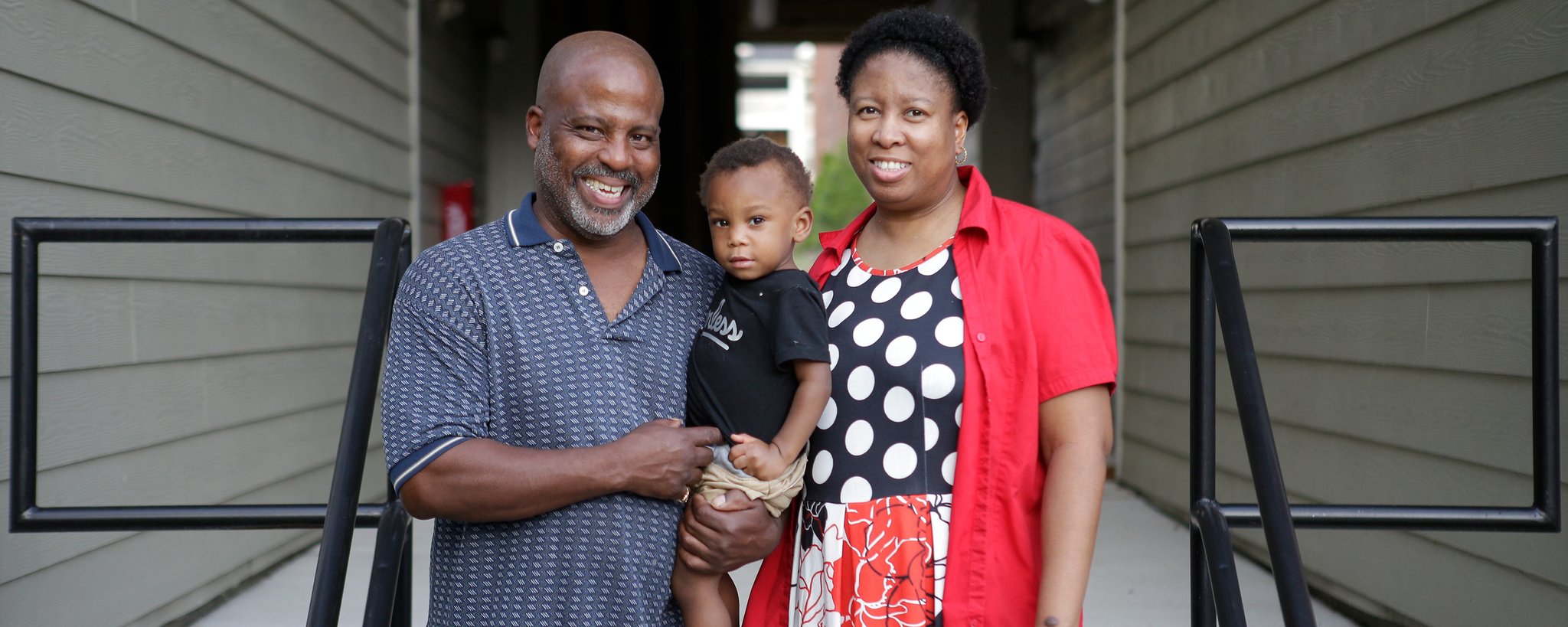
“To them it’s not about the sale, it’s about trying to help families move on. They treated me like I was their only client, and I had that one-on-one attention.”Read more about Charlisa Boyd
Charlisa Boyd
Sold to Opendoor in Raleigh, NC
Get an instant offer, choose your close date, skip repairs.
Skip the work with a cash offer from Opendoor.
Cash Now, More Later
Cash
“To them it’s not about the sale, it’s about trying to help families move on. They treated me like I was their only client, and I had that one-on-one attention.”Read more about Charlisa Boyd
Charlisa Boyd
Sold to Opendoor in Raleigh, NC

“Opendoor’s offer came in right near our appraisal, but we never had to list the house or do showings. For the kind of value Opendoor gives you, it’s just a no-brainer.”Read more about Adam Leon
Adam Leon
Sold to Opendoor in Phoenix, AZ
Calculate your mortgage with our free calculator. Get an estimate of your monthly payments, interest, and amortization.
Mortgage CalculatorEstimate the cost of selling and the net proceeds you could earn from the sale in less than 30 seconds. No commitment.
Home Sale CalculatorGet a free estimate with our home value estimator, then come back to compare it against a no-obligation Opendoor offer.
Selling to Opendoor:
Traditional listing:
Median 13 days to pending plus 30-45 days to close through California escrow. With 59% of SF homes selling above asking, well-priced homes move fast -- but California's disclosure-contingency process (TDS, NHDS, seismic disclosures) creates renegotiation windows even in a strong seller's market. SF city transfer tax (0.75% for $1M-$5M sales) applies regardless of method; the main cost comparison is Opendoor's service fee vs. agent commissions and the risk of inspection renegotiations.
Opendoor buys homes throughout San Francisco Bay Area and across nearby markets:
California markets
- Anaheim
- Concord
- Folsom
- Fresno
- Modesto
- Ontario
- Orange
- Rocklin
- Stockton
- Temecula
Nearby states
- Arizona
- Nevada
- Oregon
Selling a house in the Bay Area follows a clear process, but the right strategy depends heavily on which submarket you are in.
California sellers must prepare more documentation than in most states. Assembling these early reduces the chance of buyer rescissions or contingency disputes.
Transfer Disclosure Statement (TDS): Required for all 1-4 unit residential sales under Cal. Civil Code Sections 1102-1102.14. Sellers must disclose all known material defects. Natural Hazard Disclosure (NHD): Required under Cal. Civil Code Sections 1103-1103.14, covering 6 hazard zones. Bay Area properties frequently fall within earthquake fault zones (Hayward, San Andreas), seismic hazard zones for liquefaction, and in some areas, flood or wildland fire zones. San Francisco sellers also need the Local Optional Real Estate Transfer Disclosure (LORTD) and a soft-story retrofit disclosure if applicable. Additional required forms include smoke and carbon monoxide detector certification, water heater bracing certification, lead-based paint disclosure (homes built before 1978), Mello-Roos and special tax disclosure, HOA documents (if applicable), death on property disclosure (any death within 3 years under Cal. Civil Code Section 1710.2), and supplemental property tax notice.
Failing to deliver required disclosures on time can allow buyers to rescind, even after contract execution. Your escrow company or listing agent can provide the required forms.
Selling a Bay Area home involves several cost categories. Here is what to plan for.
Agent commissions typically represent the largest cost, ranging from 5-6% of the sale price. On a home at the Bay Area median Zillow Home Value Index of $1,356,662, that comes to roughly $67,833 to $81,400. California's documentary transfer tax is $1.10 per $1,000 (0.11%) and is typically paid by the seller. If your home is in San Francisco city, the city imposes an additional tiered transfer tax -- 0.75% for sales between $1M and $5M, which on a $1.36M sale adds approximately $10,175 in city-level tax on top of the state amount. Other Bay Area counties do not add a city transfer tax at this magnitude. Sellers also typically pay for the owner's title insurance policy, with escrow fees ranging from $2,000 to $3,500 depending on the sale price.
Pre-listing repairs, staging, and buyer concessions can add another 1-3% depending on home condition. To see a full breakdown of every line item, read our guide on how much it costs to sell a house.
Net proceeds are the amount you take home after all costs are subtracted. Here is the formula:
Net proceeds = sale price - mortgage payoff - closing costs - commissions - repairs/concessions
Using the Bay Area March 2026 Zillow Home Value Index of $1,356,662 as an example: if you owe $700,000 on your mortgage, pay 5.5% in commissions ($74,616), $1,492 in California state transfer tax, $2,000 in owner's title insurance, $2,500 in escrow fees, and $8,000 in prorated property taxes, your estimated net proceeds would be around $568,054. If your property is in San Francisco city, add approximately $10,175 in city transfer tax. Use our net proceeds calculator to run the numbers for your specific home.
Sellers age 55 or older should also consider California Proposition 19, which allows you to transfer your Prop 13 assessed value to a replacement home anywhere in California -- potentially saving significant property taxes on your next purchase.
If you need to sell your Bay Area home quickly -- without repairs, showings, or waiting on buyer financing -- Opendoor makes cash offers on homes throughout the Bay Area. The process starts with a free online offer request. You will receive a preliminary offer within 24 hours, with no obligation to proceed.
Even in the Bay Area's strong seller's market, there are sellers for whom certainty and speed matter more than optimizing every dollar. If you are relocating for a new tech role in another city, handling an estate sale under time pressure, or managing a home that needs significant repairs before it can compete with staged listings in your neighborhood, a cash offer lets you skip the prep, showings, and California's multi-contingency process. Opendoor's flexible closing window (21 to 60+ days) gives you control over the timeline without coordinating around open houses.
Sellers choose Opendoor for the certainty: a firm cash price, no financing contingency, no open houses, and a closing date you control.
A cash sale makes the most sense when speed and certainty matter more than maximizing every dollar. If you are relocating for work, managing an inherited Bay Area property, or dealing with a home that needs significant repairs before it can compete in a market where buyers expect move-in-ready condition, a cash offer lets you skip the prep, showings, and California's disclosure-contingency process.
In the Bay Area's current market, 66% of homes sell at or above asking and the average sale-to-list ratio is 102.9% -- the strongest conditions among Opendoor's major markets. Well-priced, well-presented homes consistently attract multiple offers. For sellers where certainty and speed matter, a cash offer is still worth comparing against a traditional listing. Learn more about how selling your house for cash works with Opendoor.
A cash offer is a bid to purchase a home without relying on mortgage financing, which typically means fewer contingencies and a faster path to closing. Sellers often consider cash offers because they can simplify the transaction, reduce the risk of financing fall-throughs, and shorten the overall timeline. If you're weighing your options, learning more about what a cash offer in real estate is and why to consider it can help you decide if this route makes sense for your situation.
The process is designed to streamline the selling experience, and most sellers can expect to close in as few as 21 days, though timelines may vary. Opendoor typically charges a service fee that is competitive with traditional real estate commission costs. For a broader look at how cash home sales work across the industry, Bankrate's guide to selling your house for cash is a helpful resource.
Selling a home in the Bay Area doesn't have to mean weeks of open houses, competing contingency negotiations, or navigating California's disclosure-heavy process.
The process is designed to put you in control. Sellers can typically choose a closing date that works for their schedule, and because Opendoor handles much of the complexity behind the scenes, there are fewer surprises along the way.
When you're ready to see what Opendoor can offer for your Bay Area home, requesting your free, no-obligation offer is a simple place to start.
Bay Area market at a glance (March 2026): Median home value $1,356,662 | Up 5.0% year-over-year | Days to pending: 13 | Months of supply: 1.6 | 66% of homes selling at or above asking | Average sale-to-list ratio: 102.9% | Market type: strong seller's market
As of March 2026, the Zillow Home Value Index for the Bay Area sits at $1,356,662, up 5.0% year-over-year. With 13 days to pending, 1.6 months of supply, and 66% of homes selling at or above list price, the Bay Area is one of the most competitive seller's markets in the country. The average sale-to-list ratio of 102.9% means the typical home closes above its asking price.
The market is sharply bifurcated across the metro. San Francisco single-family homes reached a median sale price of $2.15M in March 2026, up 18% year-over-year, driven by AI-sector wealth concentration. Palo Alto continues to see 63.6% of homes close above asking at a median near $3.7M. By contrast, Oakland's ZHVI has declined 8.5% year-over-year to $716,248, and Fremont is down 4.0%. Neighborhood-level pricing matters far more than metro-wide averages in the Bay Area.
The Bay Area's housing market is driven by one of the highest concentrations of high-income employment in the world. Apple, Google, Meta, Salesforce, and NVIDIA are headquartered within 35 miles of each other, and the AI boom has added a new demand layer. Hayes Valley in San Francisco, known as 'Cerebral Valley,' has become the center of AI startup activity, with OpenAI and Anthropic among the companies anchoring a wave of pre-IPO wealth creation. The anticipated IPO pipeline in 2026 is generating a new category of buyer with concentrated equity wealth.
Healthcare and research add a second anchor. UCSF employs approximately 28,000 people and anchors the Mission Bay biotech cluster. Kaiser Permanente, headquartered in Oakland, is the largest integrated health system in California. Wells Fargo and Salesforce anchor financial and enterprise tech employment in San Francisco's Financial District and SoMa. This diversified, high-income employer base sustains consistent housing demand even through tech hiring cycles.
The Bay Area's macro conditions are as favorable for sellers as they have been since the 2021-2022 peak. With 1.6 months of supply and 66% of homes closing at or above asking, well-priced homes in competitive neighborhoods consistently attract multiple offers. The key variable is pricing precision -- in a market where some neighborhoods are up 18% year-over-year and others are down 8.5%, using metro-level estimates will either leave money on the table or price you out of the buyer pool.
California's disclosure process requires preparation. Sellers in earthquake fault zones (which covers much of the Bay Area along the Hayward and San Andreas faults) and seismic hazard zones should have their NHD completed before listing to avoid contingency periods that give buyers rescission windows. Sellers in San Francisco city proper should also account for the tiered city transfer tax, which adds approximately 0.75% on top of California's standard $1.10 per $1,000. For sellers who want to bypass the prep and contingency process entirely, Opendoor's as-is cash purchase lets you compare a certain number against a traditional listing.