↗ 59%
27
New listings
This week
Get an instant offer, choose your close date, skip repairs.
Data from the last 28 days for the San Diego metro.
↗ 59%
27
New listings
This week
↗ 10%
198
Homes on market
Currently active
↘ 18%
9
Homes delisted
This week
↘ 50%
4
Homes sold
This week
Last updated on September 28, 2026
Skip the work with a cash offer from Opendoor.
Cash Now, More Later
Cash
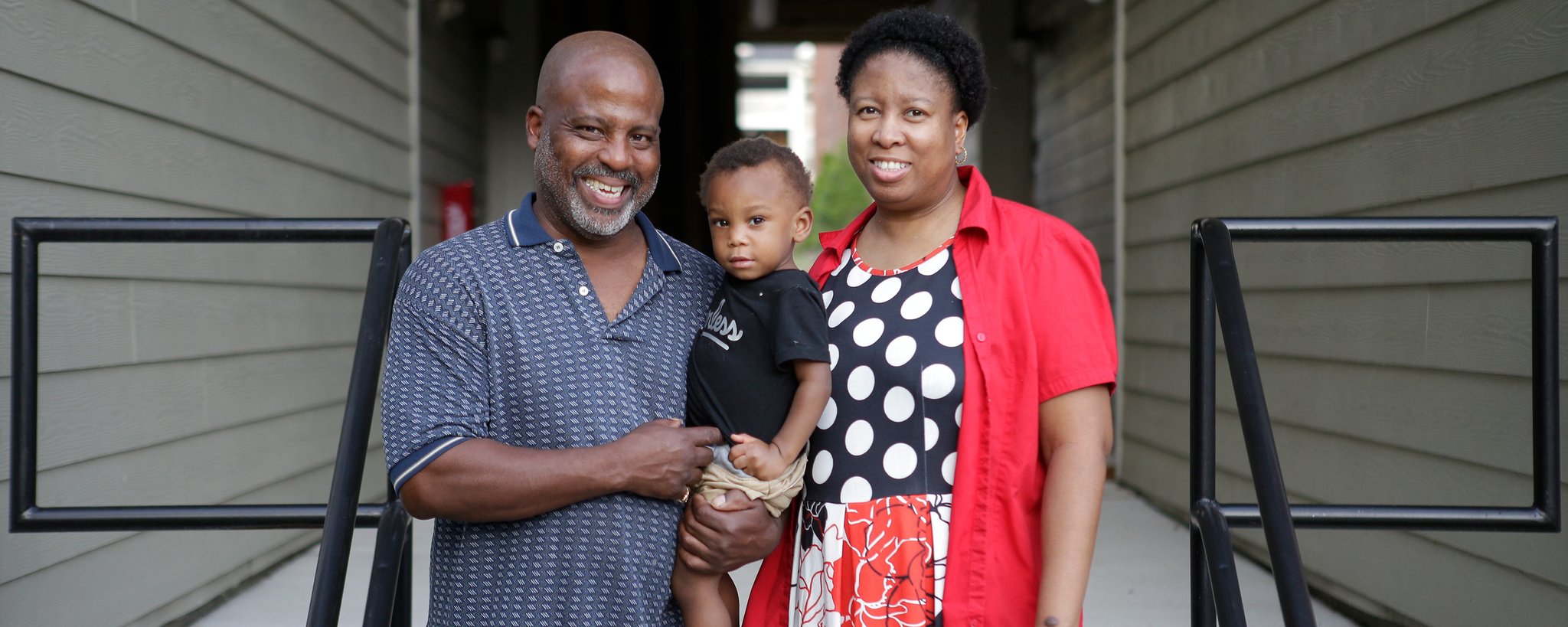
“To them it’s not about the sale, it’s about trying to help families move on. They treated me like I was their only client, and I had that one-on-one attention.”Read more about Charlisa Boyd
Charlisa Boyd
Sold to Opendoor in Raleigh, NC

“Opendoor’s offer came in right near our appraisal, but we never had to list the house or do showings. For the kind of value Opendoor gives you, it’s just a no-brainer.”Read more about Adam Leon
Adam Leon
Sold to Opendoor in Phoenix, AZ
Also looking to buy? Browse homes for sale in San Diego Ca.
Calculate your mortgage with our free calculator. Get an estimate of your monthly payments, interest, and amortization.
Mortgage CalculatorEstimate the cost of selling and the net proceeds you could earn from the sale in less than 30 seconds. No commitment.
Home Sale CalculatorGet a free estimate with our home value estimator, then come back to compare it against a no-obligation Opendoor offer.
Selling to Opendoor:
Traditional listing:
Median 21 days to pending plus 30-45 days to close through California escrow. With 55.2% of San Diego homes selling below asking, pricing and California's disclosure-contingency process add real execution risk. California transfer tax is minimal ($1.10/$1,000, no city surcharge); the main cost comparison is Opendoor's service fee vs. agent commissions and the risk of inspection/TDS renegotiations.
Selling another California home, or just over the state line? Opendoor buys homes across the region:
California cities
- Anaheim
- Concord
- Folsom
- Fresno
- Modesto
- Ontario
- Orange
- Rocklin
- Stockton
- Temecula
Nearby states
- Arizona
- Nevada
- Oregon
Selling a house in San Diego follows a clear process, but the timeline varies depending on the method you choose. Here are the core steps.
California requires more seller documentation than almost any other state. Gathering these early can prevent delays at closing.
Transfer Disclosure Statement (TDS): Required for all 1-4 unit residential sales under Cal. Civil Code Sections 1102-1102.14. The seller must disclose all known property defects and material facts. Natural Hazard Disclosure (NHD): Required under Cal. Civil Code Sections 1103-1103.14, covering 6 mandatory hazard zones including very high fire hazard severity zones, earthquake fault zones, and seismic hazard (liquefaction/landslide) zones -- all common in San Diego County. Additional required documents: smoke and carbon monoxide detector compliance certification, water heater bracing certification, lead-based paint disclosure (homes built before 1978), Mello-Roos and special tax disclosure, HOA governing documents and financials (if applicable), death on property disclosure (any death within 3 years under Cal. Civil Code Section 1710.2), military ordnance disclosure (within 1 mile), and supplemental property tax notice. A structural pest control report is customary and often lender-required.
Missing or incomplete disclosures are a common source of buyer rescissions and post-close liability in California. Your title or escrow company can help you track which forms apply to your specific property.
Selling a home in San Diego involves several cost categories. Here is what to budget for.
Agent commissions are typically the largest cost, ranging from 5-6% of the sale price. On a home at San Diego's median Zillow Home Value Index of $1,001,265, that comes to roughly $50,063 to $60,076. California's documentary transfer tax is 0.11% of the sale price ($1.10 per $1,000) -- paid by the seller at closing. The City of San Diego does not impose an additional municipal transfer tax. Sellers in San Diego County typically pay for the owner's title insurance policy, and escrow fees usually range from $1,500 to $2,500. Property taxes are prorated through closing.
Pre-listing repairs and buyer concessions can add another 1-3% depending on home condition and how negotiations go. For a full breakdown of every line item, see our guide on how much it costs to sell a house.
Net proceeds are the amount you walk away with after every cost is subtracted. Here is the formula:
Net proceeds = sale price - mortgage payoff - closing costs - commissions - repairs/concessions
Using San Diego's March 2026 Zillow Home Value Index of $1,001,265 as an example: if you owe $450,000 on your mortgage, pay 5.5% in commissions ($55,070), $1,101 in California transfer tax, $2,003 in owner's title insurance, $1,800 in escrow fees, and $6,500 in prorated property taxes, your estimated net proceeds would be around $484,791. Your actual number depends on your loan balance, negotiated fees, and how much work the home needs. Use our net proceeds calculator to get a personalized estimate.
Sellers age 55 or older should also consider California Proposition 19, which allows you to transfer your Prop 13 assessed value to a replacement home anywhere in California -- potentially saving significant property taxes on your next purchase.
If you need to sell your San Diego home quickly -- without repairs, showings, or waiting on buyer financing -- Opendoor makes cash offers on homes throughout San Diego County. The process starts with a free online offer request. You will receive a preliminary offer within 24 hours, with no obligation to proceed.
San Diego's military PCS market adds urgency on the buyer side, but it also means sellers need to move on government timelines when their own orders come through. Opendoor's flexible closing window (21 to 60+ days) accommodates PCS schedules without requiring you to coordinate showings around a busy household. California's disclosure-contingency process -- TDS, NHD, and inspection contingencies -- creates renegotiation risk even in a strong market. Opendoor purchases as-is, with no inspection renegotiations.
Sellers choose Opendoor for the certainty: a firm cash price, no financing contingency, no open houses, and a closing date you control.
A cash sale makes the most sense when speed and certainty matter more than maximizing every dollar. If you are relocating for work or military orders, managing an inherited San Diego property, or dealing with a home that needs significant repairs before it can compete in the market, a cash offer lets you skip the prep, showings, and California's disclosure-contingency process.
In San Diego's current market, 55.2% of homes sell below asking and the Zillow Home Value Index has declined 3.2% year-over-year. With 21 days to pending at the median, well-priced homes still move quickly -- but overpriced or condition-compromised listings accumulate market time and typically require price cuts. For sellers where certainty matters more than optimizing the last dollar, selling for cash in San Diego is worth exploring. Learn more about how selling your house for cash works with Opendoor.
A cash offer is a bid to purchase a home without relying on mortgage financing, which typically means fewer contingencies and a faster path to closing. Sellers often consider cash offers because they can simplify the transaction, reduce the risk of financing fall-throughs, and shorten the overall timeline. If you're weighing your options, learning more about what a cash offer in real estate is and why to consider it can help you decide if this route makes sense for your situation.
The process is designed to streamline the selling experience, and most sellers can expect to close in as few as 21 days, though timelines may vary. Opendoor typically charges a service fee that is competitive with traditional real estate commission costs. For a broader look at how cash home sales work across the industry, Bankrate's guide to selling your house for cash is a helpful resource.
Selling a home in San Diego doesn't have to mean months of showings, California disclosure negotiations, or last-minute buyer complications. Opendoor offers a streamlined approach designed to reduce the stress and unpredictability that often come with a traditional sale.
The process aims to put you in control. Sellers can typically choose a closing date that works for their schedule, and because Opendoor handles much of the complexity behind the scenes, there are fewer surprises along the way.
When you're ready to see what Opendoor can offer for your San Diego home, requesting your free, no-obligation offer is a simple place to start.
San Diego market at a glance (March 2026): Median home value $1,001,265 | Down 3.2% year-over-year | Days to pending: 21 | Months of supply: 2.2 | 55.2% of homes selling below asking | Market type: transitioning balanced, mild seller lean
As of March 2026, the Zillow Home Value Index for San Diego sits at $1,001,265, down 3.2% year-over-year. At 21 days to pending and 2.2 months of supply, the market remains tight by national standards, but 55.2% of homes selling below asking signals that buyer selectivity is real and pricing accuracy is critical.
The market is notably bifurcated. Coastal luxury submarkets like La Jolla (+4.4% YoY) and Coronado (+1.5% YoY) continue appreciating, while north inland suburbs like Rancho Bernardo (-6.0%) and Torrey Highlands (-5.6%) have pulled back more sharply. North Park, a competitive urban neighborhood, has 32% of sales closing above asking. Sellers in declining submarkets need to price carefully, while well-positioned coastal properties continue to command strong demand.
The tables below reflect closed home sales within San Diego city limits, drawn from Opendoor's first-party MLS data. They are more granular than the broader metro-level market summary above, so the monthly sale counts and medians shown here can differ from metro-wide figures.
From Opendoor first-party MLS data for San Diego, CA (through Jun 2026). Month-over-month (MoM) change is calculated on the median sale price.
| Month | Homes sold | Median sale price | MoM change | Median days on market | Sale-to-list |
|---|---|---|---|---|---|
| Jun 2025 | 793 | $960,000 | — | 52 | 100.0% |
| Jul 2025 | 834 | $915,000 | -4.7% | 54 | 99.4% |
| Aug 2025 | 841 | $950,000 | +3.8% | 56 | 99.0% |
| Sep 2025 | 809 | $905,000 | -4.7% | 56 | 99.4% |
| Oct 2025 | 861 | $910,000 | +0.6% | 56 | 99.2% |
| Nov 2025 | 654 | $912,000 | +0.2% | 57 | 99.3% |
| Dec 2025 | 765 | $927,125 | +1.7% | 56 | 99.9% |
| Jan 2026 | 542 | $947,500 | +2.2% | 66 | 99.1% |
| Feb 2026 | 700 | $945,000 | -0.3% | 48 | 100.0% |
| Mar 2026 | 778 | $925,000 | -2.1% | 51 | 100.0% |
| Apr 2026 | 884 | $925,000 | 0.0% | 46 | 100.0% |
| May 2026 | 842 | $940,000 | +1.6% | 46 | 100.0% |
| Jun 2026 | 862 | $1,000,000 | +6.4% | 49 | 100.0% |
Median days on market and sale price by San Diego ZIP code, Opendoor MLS data (last 6 months, ZIP codes with 25+ closed sales), sorted fastest first.
| ZIP code | Median days on market | Median sale price | Homes sold (6 mo) |
|---|---|---|---|
| 92119 | 41 | $965,000 | 115 |
| 92120 | 43 | $1,062,500 | 146 |
| 92130 | 43 | $2,190,000 | 162 |
| 92139 | 43 | $680,000 | 90 |
| 92131 | 44 | $1,400,500 | 138 |
| 92114 | 44 | $763,500 | 148 |
| 92124 | 44 | $904,500 | 86 |
| 92129 | 44 | $1,300,000 | 194 |
| 92116 | 45 | $1,052,000 | 147 |
| 92117 | 46 | $1,085,000 | 204 |
| 92104 | 46 | $959,000 | 163 |
| 92123 | 47 | $940,000 | 95 |
New listings versus homes sold each month, Opendoor MLS data for San Diego through Jun 2026. A sold-to-new ratio below 100% means inventory is building.
| Month | New listings | Homes sold | Sold-to-new ratio |
|---|---|---|---|
| Jun 2025 | 1,932 | 793 | 41% |
| Jul 2025 | 1,877 | 834 | 44% |
| Aug 2025 | 1,648 | 841 | 51% |
| Sep 2025 | 1,609 | 809 | 50% |
| Oct 2025 | 1,492 | 861 | 58% |
| Nov 2025 | 953 | 654 | 69% |
| Dec 2025 | 761 | 765 | 101% |
| Jan 2026 | 1,424 | 542 | 38% |
| Feb 2026 | 1,260 | 700 | 56% |
| Mar 2026 | 1,571 | 778 | 50% |
| Apr 2026 | 1,613 | 884 | 55% |
| May 2026 | 1,557 | 842 | 54% |
| Jun 2026 | 1,490 | 862 | 58% |
San Diego's economy is built on four durable pillars. The military sector anchors the metro with approximately 110,000 active-duty personnel across Naval Base San Diego -- the largest Navy homeport on the West Coast -- MCAS Miramar, Camp Pendleton, Naval Air Station North Island, and Naval Medical Center San Diego. This military presence generates year-round housing demand from service members, veterans, defense contractors, and federal civilian employees.
The life sciences sector represents the second or third largest biotech cluster in the United States, with $57 billion in annual economic impact and 76,000 jobs anchored by UC San Diego, Scripps Research, and the Salk Institute. Defense technology (Qualcomm with 10,124 local employees, General Atomics with 13,000 employees) and healthcare (Sharp HealthCare at 20,139 employees, Scripps Health at 14,732 employees) round out a diversified, high-income employer base that creates consistent buyer demand across all price tiers.
San Diego's market has moderated from pandemic-era highs, but it remains a seller-leaning market by national standards. The key insight for sellers: location within the metro matters far more than metro-wide statistics. La Jolla and Coronado sellers are in a different market than Rancho Bernardo or Torrey Highlands sellers, and pricing strategy should reflect neighborhood-level trends, not the citywide average.
California's disclosure process adds a layer of complexity that sellers should prepare for rather than avoid. Completing the TDS and NHD upfront -- and being transparent about condition -- reduces the likelihood of post-inspection renegotiations. Sellers who price accurately, disclose proactively, and present well are still closing successfully in this market. For sellers who want to bypass this process entirely, Opendoor's as-is cash purchase is worth comparing against a net proceeds estimate from a traditional listing.