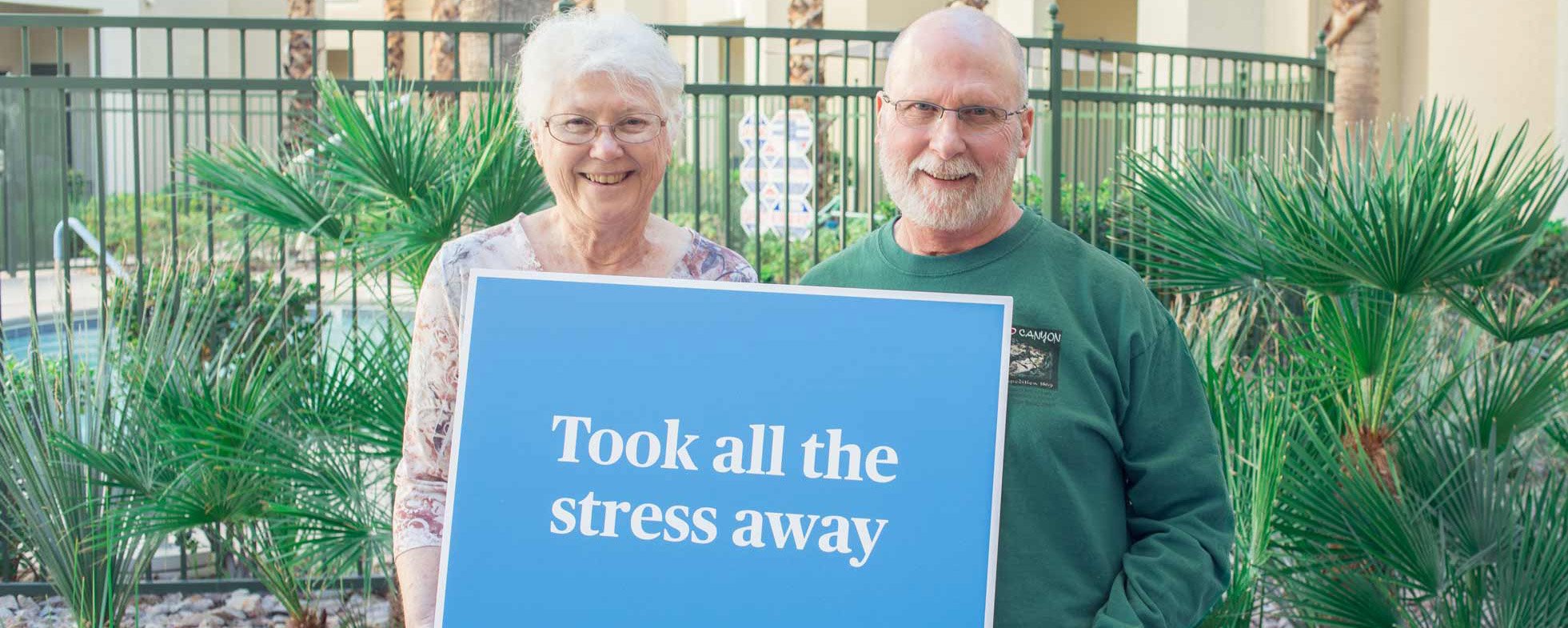

“To them it’s not about the sale, it’s about trying to help families move on. They treated me like I was their only client, and I had that one-on-one attention.”Read more about Charlisa Boyd
Charlisa Boyd
Sold to Opendoor in Raleigh, NC
Get an instant offer, choose your close date, skip repairs.

Skip the work with a cash offer from Opendoor.
Cash Now, More Later
Cash
“To them it’s not about the sale, it’s about trying to help families move on. They treated me like I was their only client, and I had that one-on-one attention.”Read more about Charlisa Boyd
Charlisa Boyd
Sold to Opendoor in Raleigh, NC

“Opendoor’s offer came in right near our appraisal, but we never had to list the house or do showings. For the kind of value Opendoor gives you, it’s just a no-brainer.”Read more about Adam Leon
Adam Leon
Sold to Opendoor in Phoenix, AZ
Calculate your mortgage with our free calculator. Get an estimate of your monthly payments, interest, and amortization.
Mortgage CalculatorEstimate the cost of selling and the net proceeds you could earn from the sale in less than 30 seconds. No commitment.
Home Sale CalculatorGet a free estimate with our home value estimator, then come back to compare it against a no-obligation Opendoor offer.
Colorado sellers typically pay 5.5-8% of the sale price in total. Colorado has no meaningful state transfer tax - only a nominal documentary fee of $0.01 per $100 under C.R.S. § 39-13-102 (about $54 on a $540,000 sale). Exception: mountain resort municipalities including Vail, Aspen, Telluride, and Snowmass Village impose local real estate transfer assessments (RETA) of 1-2%. Non-resort seller costs include listing commission (~2.5-3%), a closing/settlement fee (~$300-500), recording fees (~$26-52), and pro-rated property taxes. In Colorado, buyers customarily pay for owner's title insurance - unlike Arizona or Utah where sellers pay.
Your net depends on sale price, mortgage balance, commissions, and closing costs. With Colorado's statewide median around $621,883 and total seller costs of ~5.5-8%, most Front Range sellers net approximately $572,000-$589,000 before mortgage payoff. Denver-area sellers at the city median of ~$534,000 would net approximately $491,000-$507,000. Use the home sale calculator to estimate your specific situation based on your price, location, and remaining mortgage.
Cash buyers and iBuyers like Opendoor purchase homes across Colorado - from Denver, Aurora, and Lakewood to Colorado Springs, Fort Collins, and Pueblo - without requiring repairs, showings, or financing contingencies. Get a firm offer and choose a close date that works for your timeline, whether you need 21 days or 60.
Whether you need to sell in 21 days or 90, Opendoor gives you certainty on price and timeline - no agent commissions, no open houses, no last-minute buyer fallouts.
Ready to see what your Colorado home is worth? Get a cash offer in 24 hours.
Opendoor's cash offer gives Colorado sellers a clear alternative to the traditional listing process - no repairs required, no showings, and no risk of a buyer's financing falling through at the last minute.
No waiting, no contingencies, no surprises - just a predictable sale on your schedule.
Colorado's Front Range market has shifted toward buyers since 2022 peaks - Denver home values are down ~4.3% YoY and Colorado Springs is down ~2.2% YoY. In a softening market, pricing precision and timing matter more than ever. Opendoor gives you a firm cash offer backed by current market data so you know exactly what you'll net before you commit.
Skip the prep work entirely. No repairs, no staging, no contractor scheduling. Opendoor buys your Colorado home as-is - whether it's a Denver suburb, a Colorado Springs military-adjacent property, a Fort Collins neighborhood near CSU, or a Northern Colorado home.
Close on your schedule. Choose any date from 21 to 60 days. If you're relocating for Lockheed Martin, Peterson Space Force Base, Google Boulder, a UCHealth position, or Colorado State University, a guaranteed close date removes the biggest variable from your move.
Colorado market at a glance (2025-2026): Statewide median home value: $621,883 | 12-month appreciation: +0.6% | Denver ZHVI: $539,666 (-4.3% YoY) | Colorado Springs ZHVI: $449,452 (-2.2% YoY) | Boulder median: $1,160,786 (+1.8% YoY) | Fort Collins median: $650,138 (-0.9% YoY)
Colorado is transitioning from seller's market conditions toward balance and buyer-favorable territory across most Front Range submarkets. The Zillow Home Value Index for Colorado reflects meaningful cooling from 2021-2022 pandemic peaks, particularly in the Denver metro where 61.5% of homes are selling below asking price. Boulder remains the strongest submarket with +1.8% YoY appreciation, driven by constrained supply and continued tech sector demand. Long-term appreciation across the state remains robust - Colorado homes have appreciated 40.95% over the past five years and 98.55% over the past decade.
Colorado's economy is anchored by aerospace and defense - Lockheed Martin Space in Littleton employs 14,000 people and the Denver metro is the nation's leading private aerospace employment hub. Peterson Space Force Base (NORAD/USNORTHCOM HQ), Schriever Space Force Base (GPS control operations), Fort Carson, Buckley Space Force Base, and the U.S. Air Force Academy combine for one of the highest per-capita military concentrations in the country. Raytheon Intelligence and Space in Aurora, Northrop Grumman, and dozens of defense contractors add to this critical employment base.
Technology is the second major driver - Google maintains a major campus in Boulder, Oracle is headquartered in Broomfield, and the Denver-Boulder tech corridor has attracted Amazon, Palantir, Arrow Electronics, and numerous high-growth startups. UCHealth (30,000+ employees) and CommonSpirit Health are the dominant healthcare anchors. The University of Colorado system (65,000+ students), Colorado State University in Fort Collins (33,000 students), and the Colorado School of Mines in Golden anchor university-adjacent housing demand. Colorado's ski industry - including Vail, Aspen, Breckenridge, and Steamboat Springs - generates $4.8B annually and drives premium mountain real estate values.
The Front Range market requires pricing discipline in 2025-2026. Denver and Colorado Springs sellers are seeing modest YoY value declines, which means well-priced homes sell; overpriced homes sit. Boulder sellers retain the best negotiating position with +1.8% YoY appreciation and a constrained supply of housing. Fort Collins offers a balanced market with CSU and Northern Colorado employers providing steady buyer demand.
Colorado has no meaningful transfer tax on Front Range properties - the $0.01/$100 documentary fee is negligible. Sellers do not customarily pay title insurance in Colorado (buyers pay), keeping non-commission seller costs very low. However, if you own property in a mountain resort municipality like Vail, Aspen, or Telluride, local RETA transfer taxes of 1-2% apply and should be factored into your net. If your timeline is tight or you want to skip the uncertainty of today's softening market, a cash offer removes both the price and timing variables.
Opendoor serves markets statewide across Colorado. The cities below are our top markets - those with enough recent sales data to show local statistics and trends - but you can get a cash offer on your home anywhere in Colorado.
Spring (March through June) is peak season across the Front Range - buyer activity rises as families aim to move before the school year. Denver, Colorado Springs, and Fort Collins all see heightened demand in April and May. Mountain resort markets (Aspen, Vail, Telluride) have a different seasonal pattern driven by ski season (winter) and summer tourism. Winter months are slowest for Front Range markets. See our guide on the best time to sell a house.
Colorado homes in the Denver metro averaged about 30 days to go pending as of early 2026, plus 30-45 days to close once under contract. Colorado Springs averaged ~36 days to pending. A cash buyer closes in 21 days. Total traditional timeline for the Front Range: 2-3 months. Mountain resort markets can take longer due to a narrower buyer pool. Read more about how long it takes to sell a house.
Colorado sellers typically pay 5.5-8% total. This includes listing commission (~2.5-3%), a closing/settlement fee to the title company (~$300-500), recording fees (~$26-52), and pro-rated property taxes. Colorado has no meaningful transfer tax on Front Range properties - only a $0.01/$100 documentary fee. Note: buyers customarily pay owner's title insurance in Colorado, unlike Arizona or Utah. Mountain resort sellers may also owe a local RETA of 1-2%. See the full breakdown of how much it costs to sell a house.
Colorado has no state real estate transfer tax. There is a nominal documentary fee of $0.01 per $100 of sale price under C.R.S. § 39-13-102 - approximately $54 on a $540,000 sale, which is essentially negligible. However, certain mountain resort municipalities including Vail, Aspen, Telluride, Snowmass Village, and Breckenridge impose local real estate transfer assessments (RETA) of 1-2% of the sale price. If your property is in one of these jurisdictions, confirm the local RETA before listing. Learn about other hidden fees when selling a house.
Colorado requires sellers to complete the CREC Seller's Property Disclosure (SPD) form under C.R.S. § 38-35.7-101. The form is part of the Colorado CBS-R contract (Section 10.1) and must be delivered to the buyer before or at contract execution. It covers structure, roof, foundation, HVAC, plumbing, electrical, water and sewer, environmental hazards, and all known material defects. Disclosure is required; repair is not. Read how to sell your house for more on seller obligations.
No. Colorado is a title/escrow company state - all residential closings are handled by licensed title companies and independent closing companies under C.R.S. § 10-11-101. An attorney is not required by law for a standard residential transaction. Either party may hire one for complex situations such as estate sales, divorce, or commercial properties, but it is entirely optional. See our guide on how to sell your house.
The fastest options in Colorado: (1) sell to a cash buyer like Opendoor and close in 21 days, (2) price at or slightly below recent comps to generate immediate interest in a softening market, or (3) list in March through May when Front Range buyer activity peaks. In Denver's current market, well-priced homes still move quickly; overpriced homes sit and often require price reductions. Read the complete guide to how to sell your house fast.
Yes. Colorado's disclosure law requires you to disclose known defects on the SPD form - it does not require you to fix them. You can sell as-is by completing the SPD, pricing to reflect the property's condition, and accepting a buyer willing to take it on. Cash buyers and iBuyers like Opendoor purchase as-is with no repair requirements. Learn more about how to sell your house.
A cash offer means the buyer does not need a mortgage - no lender approval, no appraisal contingency, no financing fall-through risk. Cash offers typically close in 21 days versus 2-3 months for financed transactions. In Colorado's current buyer-leaning market, removing financing risk also strengthens your position in negotiations. Learn what to expect from a cash offer in real estate.
Listing with an agent may net more but requires 30-45+ days on market plus 30-45 days to close, with no guarantee on final price. In Colorado's softening market, 61.5% of Denver homes are selling below asking - pricing risk is real. Opendoor offers a guaranteed price, no commission on your end, no repairs, and a close date you control. If certainty matters more than squeezing out the last dollar, the math often favors Opendoor. See the full comparison guide.
Key drivers in Colorado are proximity to major employers (Lockheed Martin, Peterson SFB, Google Boulder, UCHealth), school district ratings, Front Range access versus mountain/rural locations, and home condition. Boulder commands the highest values ($1.16M median) due to university proximity and constrained supply. Denver proper values have softened ~4.3% YoY. Military-adjacent Colorado Springs neighborhoods hold value due to stable federal employment. Mountain resort properties in Aspen and Vail are premium but subject to local RETA. Read about factors that influence home value.
Colorado's long-term fundamentals remain strong - homes have appreciated 40.95% over five years and 98.55% over ten years. The near-term picture is mixed: Front Range markets are softening from pandemic peaks, with Denver down ~4.3% and Colorado Springs down ~2.2% YoY. Boulder (+1.8% YoY) is the outlier. If you've held your Colorado home for several years, you likely still have substantial equity. If certainty on price and timeline matters, Opendoor's cash offer removes the wait. Read more about the best time to sell a house.
Yes. Colorado requires nonresident sellers to have 2% of the sales price (or the net proceeds, whichever is less) withheld at closing under C.R.S. § 39-22-604.5. The withholding is remitted to the Colorado Department of Revenue. Exemptions may apply if the gain is below a threshold or if the property was used as a primary residence. Nonresident sellers should consult a Colorado CPA before closing. Learn about other hidden fees when selling a house.