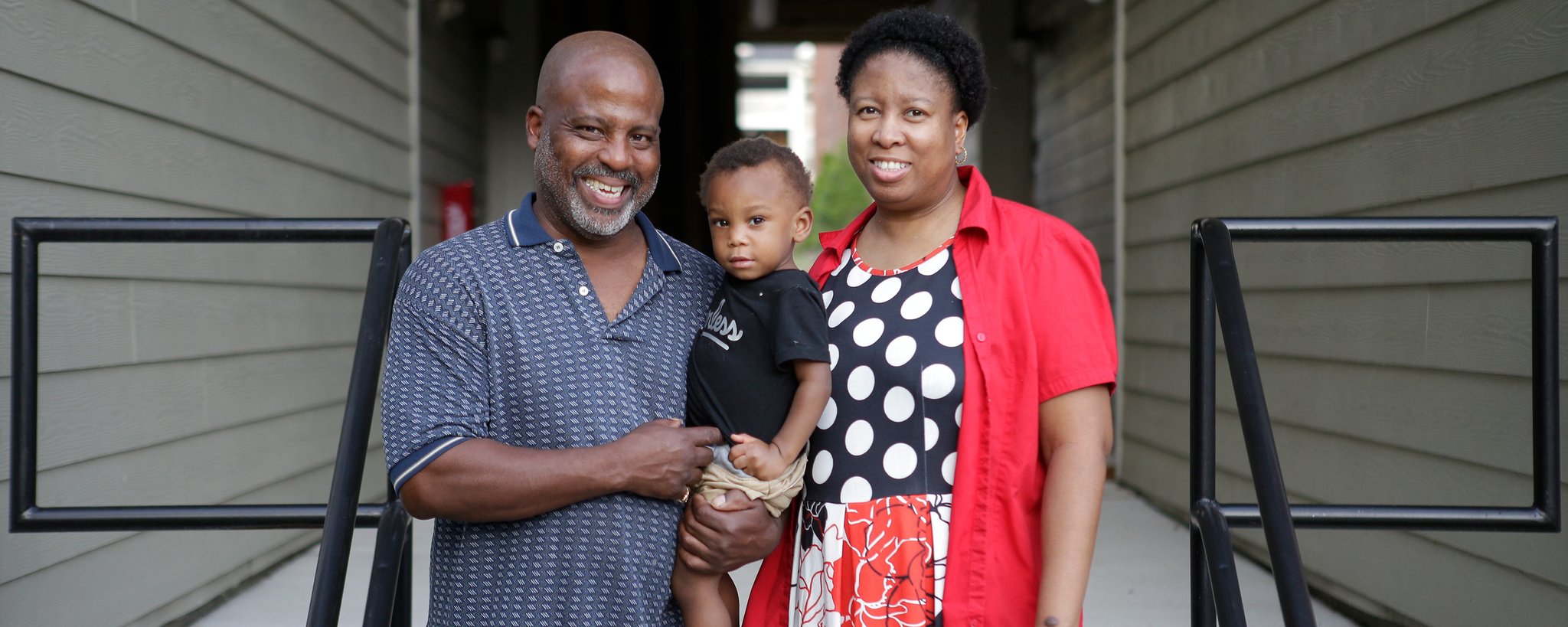
“To them it’s not about the sale, it’s about trying to help families move on. They treated me like I was their only client, and I had that one-on-one attention.”Read more about Charlisa Boyd
Charlisa Boyd
Sold to Opendoor in Raleigh, NC
Get an instant offer, choose your close date, skip repairs.

Skip the work with a cash offer from Opendoor.
Cash Now, More Later
Cash
“To them it’s not about the sale, it’s about trying to help families move on. They treated me like I was their only client, and I had that one-on-one attention.”Read more about Charlisa Boyd
Charlisa Boyd
Sold to Opendoor in Raleigh, NC

“Opendoor’s offer came in right near our appraisal, but we never had to list the house or do showings. For the kind of value Opendoor gives you, it’s just a no-brainer.”Read more about Adam Leon
Adam Leon
Sold to Opendoor in Phoenix, AZ
Calculate your mortgage with our free calculator. Get an estimate of your monthly payments, interest, and amortization.
Mortgage CalculatorEstimate the cost of selling and the net proceeds you could earn from the sale in less than 30 seconds. No commitment.
Home Sale CalculatorGet a free estimate with our home value estimator, then come back to compare it against a no-obligation Opendoor offer.
Illinois sellers typically pay 8-9% of the sale price total. Agent commissions average 5.53% (2.81% listing + 2.72% buyer agent). Additional seller costs include the state real estate transfer tax ($0.50 per $500, approximately 0.10%), title services (~0.32%), owner's title insurance (~0.23%), recording fees (~$125), and attorney fees ($750-$1,250 flat - strongly customary in Illinois even if not legally required). In Cook County, sellers also pay an additional $0.25 per $500 county transfer tax. Total non-commission closing costs run approximately 2.94% of the sale price.
Your net proceeds depend on your sale price, remaining mortgage balance, agent commissions, and closing costs. With Illinois's March 2026 statewide median at $315,000 and total seller costs around 8-9%, most sellers net approximately $288,000-$293,000 before mortgage payoff. Chicago metro sellers face higher price points - the Chicago Metro median was $375,000 in March 2026 - but also higher attorney and title costs. Use the home sale calculator to estimate your specific net.
Cash buyers and iBuyers like Opendoor purchase homes across Illinois - from Chicago and Naperville to Rockford and Peoria - without repairs, showings, or financing contingencies. No attorney review period, no open houses, no waiting. Get a firm offer and choose your close date.
Whether you need to sell in 21 days or 60, Opendoor gives you certainty on price and timeline - no agent commissions, no open houses, no last-minute buyer fallouts.
Ready to see what your Illinois home is worth? Get a cash offer in 24 hours.
Opendoor's cash offer gives Illinois sellers a straightforward alternative to the traditional listing process - no repairs required, no attorney review period, no risk of a buyer's financing falling through.
No waiting, no contingencies, no surprises - just a predictable sale on your schedule.
Illinois homes moved at a strong pace in March 2026 - 10,075 homes sold statewide, up 3.1% year-over-year, with the median reaching $315,000 (+6.8% YoY). But inventory is shrinking (-7.7% YoY), making accurate pricing critical. Opendoor gives you a firm cash offer backed by current market data so you know exactly what you'll net before you commit.
Skip the Illinois closing complexity entirely. No attorney review negotiations, no required disclosures follow-up, no contractor coordination before listing. Opendoor buys your Illinois home as-is - whether it's a vintage greystone in Chicago, a brick ranch in Naperville, or a craftsman in Peoria.
Close on your schedule. Choose any date from 21 to 60 days out. If you're relocating for CME Group, Caterpillar, Northwestern Hospital, or a university system, a predictable close date removes the biggest variable from your move.
Illinois market at a glance (March 2026): Median sale price $315,000 | YoY change: +6.8% | Closed sales: 10,075 (+3.1% YoY) | Active listings: 17,099 (-7.7% YoY) | 30-year mortgage rate: 6.2%
Illinois is a seller-leaning market with tightening inventory. Active listings fell 7.7% year-over-year in March 2026, and prices climbed 6.8% despite rising mortgage rates. The Zillow Home Value Index puts statewide home values at approximately $346,503 (+6.21% YoY), reflecting strong underlying appreciation. In Chicago, inventory fell a dramatic 28.8% YoY while the median rose 7.7% to $409,200 - among the tightest urban markets in the Midwest.
Chicago is one of the world's top financial centers - home to CME Group (the world's largest derivatives exchange), the Chicago Board of Trade, United Airlines, Boeing, Walgreens Boots Alliance, and Abbott Laboratories. The city also hosts a growing tech sector anchored by Salesforce, Google, and Motorola Solutions, drawing talent from Northwestern, University of Chicago, and the University of Illinois system. The metro's corporate concentration supports sustained housing demand across Cook County and the collar counties.
Beyond Chicago, Illinois' industrial backbone is anchored by Caterpillar Inc. in Peoria and Deere and Company in Moline, while the state ranks 3rd nationally in soybean and corn production. Healthcare is a major employer statewide - Northwestern Memorial, Rush University Medical Center, and UI Health collectively employ tens of thousands. This economic diversity creates demand across all four major metros and helps buffer Illinois real estate from single-sector downturns.
Illinois's shrinking inventory (-7.7% statewide, -28.8% in Chicago) creates urgency among buyers and supports seller pricing power. March 2026 closed sales were up 3.1% year-over-year even as mortgage rates averaged 6.2%, suggesting underlying demand remains firm. The spring market (March through May) is historically the peak selling window across all Illinois metros.
Price variation across the state is significant. Chicago city median ($409,200) and Naperville suburbs ($692,188) command the highest values, while Rockford ($170,304) and Peoria ($187,958) offer affordable entry points with strong recent appreciation (6.5-7% YoY). If certainty matters more than squeezing every dollar, a cash offer eliminates attorney review timelines, contingency negotiations, and market timing risk.
Opendoor serves markets statewide across Illinois. The cities below are our top markets - those with enough recent sales data to show local statistics and trends - but you can get a cash offer on your home anywhere in Illinois.
Spring is the peak selling season - March through May brings the highest buyer activity across Chicago, the suburbs, and downstate markets. March 2026 saw 10,075 closed sales statewide (+3.1% YoY) and the median hit $315,000. Summer stays active; winter slows significantly, especially in Chicago where harsh weather reduces showings. See our guide on the best time to sell a house.
A traditional sale in Illinois typically takes 6-10 weeks total. Illinois contracts customarily include a 5-business-day attorney review period after signing, adding time not present in other states. After review, financed closings take 30-45 additional days. A cash buyer closes in 21 days with no attorney review period. Read more about how long it takes to sell a house.
Sellers typically pay 8-9% total. This includes agent commission (~5.53%), state transfer tax (~0.10%), title services (~0.32%), owner's title insurance (~0.23%), recording fees (~$125), and attorney fees ($750-$1,250 - strongly customary). Cook County sellers pay an additional 0.05% county transfer tax. See the full breakdown of how much it costs to sell a house.
Illinois charges a state real estate transfer tax of $0.50 per $500 (0.10%) of the sale price, paid by the seller. Cook County adds $0.25 per $500 (0.05%), also paid by the seller. The City of Chicago adds a separate $1.50 per $500 (0.30%) paid by the buyer. On a $315,000 Illinois home outside Cook County, the state tax equals $315. Learn about other hidden fees when selling a house.
Illinois requires sellers to complete a Residential Real Property Disclosure Report under the Residential Real Property Disclosure Act (765 ILCS 77). Sellers must disclose actual knowledge of material defects covering structure, foundation, roof, HVAC, electrical, plumbing, water, flooding, environmental hazards, and pest damage. There are no exemptions - all residential sellers must disclose. Federal lead-based paint disclosure is also required for homes built before 1978. Read how to sell your house for more on seller obligations.
Illinois does not legally mandate an attorney at closing statewide, but attorneys are strongly customary - especially in the Chicago metro area, where an attorney review period is considered standard practice. Most Illinois contracts include a 5-business-day attorney review period after signing. Outside Chicago, closings can be handled by a title company, but many sellers still hire an attorney. Budget $750-$1,250 for attorney fees. See our guide on how to sell your house.
The fastest options: (1) sell to a cash buyer like Opendoor and close in 21 days with no attorney review period, (2) price at or slightly below current market value to generate immediate offers, or (3) list during peak spring season (March-May). Illinois's standard attorney review period adds time to traditional sales - cash offers skip this entirely. Read the complete guide to how to sell your house fast.
Yes. Illinois disclosure law (765 ILCS 77) requires disclosing known defects, not fixing them. Sellers must disclose what they know but are not legally required to make repairs. Cash buyers and iBuyers purchase as-is with no repair requirements. Traditional buyers may still request concessions after inspection during the attorney review period. Learn more about how to sell your house.
A cash offer means the buyer does not need a mortgage - no lender approval, no appraisal contingency, and no risk of financing falling through. In Illinois, cash offers also eliminate the standard attorney review period, letting you close in 21 days vs. 6-10 weeks for a financed sale. Learn what to expect from a cash offer in real estate.
Listing with an agent may net more but involves a 5-business-day attorney review period, showings, inspection negotiations, and a 6-10 week timeline. Opendoor offers a guaranteed price, no commission, no repairs, no attorney review delay, and a flexible close date. See the full comparison guide.
In Illinois, key drivers are proximity to major employers (CME Group, Caterpillar, Northwestern Hospital, state universities), school district ratings (especially in DuPage and Lake counties), Chicago transit access, lot size, and home condition. Location creates enormous variation - Naperville suburbs command a $692,000 median vs. $170,000 in Rockford. Read about factors that influence home value.
Illinois inventory fell 7.7% year-over-year in March 2026 while prices rose 6.8% to a $315,000 median. Chicago inventory dropped 28.8% YoY with the city median at $409,200. The supply squeeze is creating seller-favorable conditions, though rising mortgage rates (6.2% in March 2026) are moderating buyer pool size. If certainty matters, Opendoor's cash offer removes market timing from the equation. Read more about the best time to sell a house.
Illinois does not have a mandatory real estate withholding program for nonresident sellers at closing like some states. However, nonresident sellers are required to file an Illinois income tax return reporting any gain from the sale. Illinois has a flat 4.95% individual income tax rate. Consult a tax advisor before closing to calculate your Illinois capital gains liability and any applicable exemptions. Learn about hidden fees when selling a house.