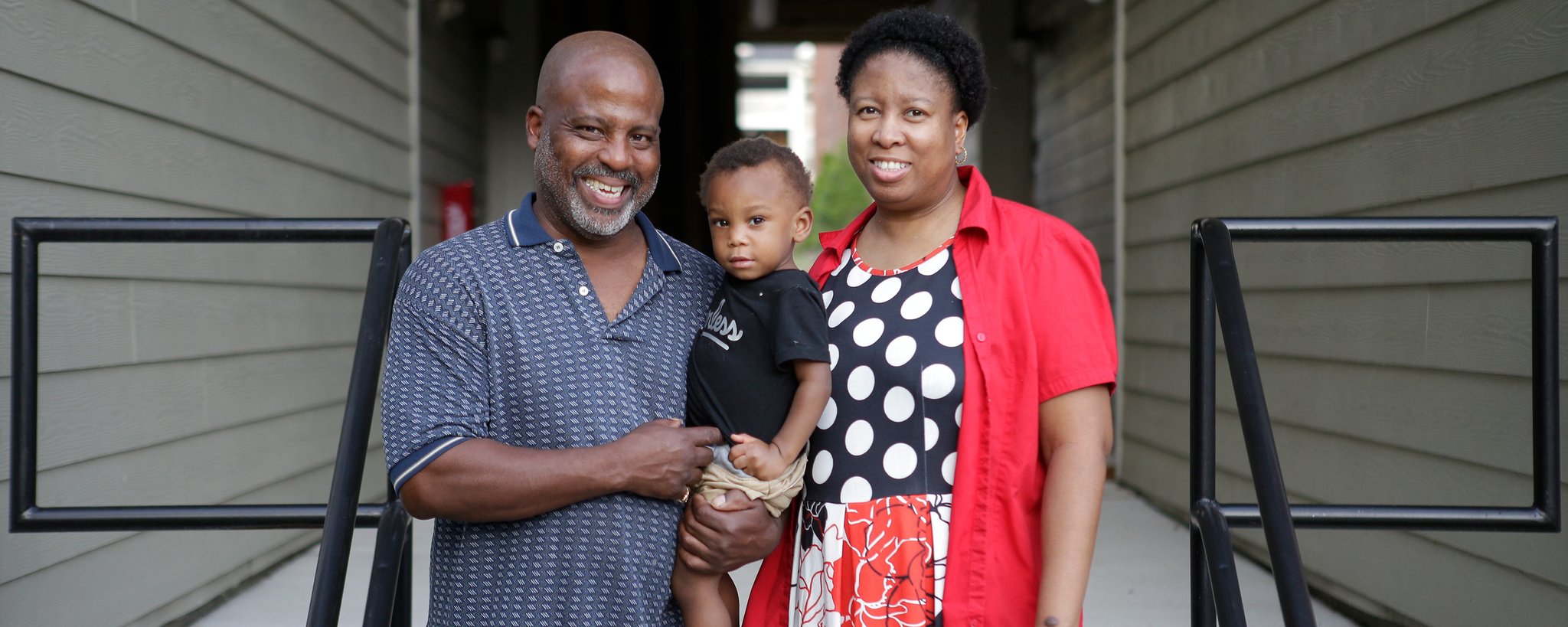
“To them it’s not about the sale, it’s about trying to help families move on. They treated me like I was their only client, and I had that one-on-one attention.”Read more about Charlisa Boyd
Charlisa Boyd
Sold to Opendoor in Raleigh, NC
Get an instant offer, choose your close date, skip repairs.

Skip the work with a cash offer from Opendoor.
Cash Now, More Later
Cash
“To them it’s not about the sale, it’s about trying to help families move on. They treated me like I was their only client, and I had that one-on-one attention.”Read more about Charlisa Boyd
Charlisa Boyd
Sold to Opendoor in Raleigh, NC

“Opendoor’s offer came in right near our appraisal, but we never had to list the house or do showings. For the kind of value Opendoor gives you, it’s just a no-brainer.”Read more about Adam Leon
Adam Leon
Sold to Opendoor in Phoenix, AZ
Calculate your mortgage with our free calculator. Get an estimate of your monthly payments, interest, and amortization.
Mortgage CalculatorEstimate the cost of selling and the net proceeds you could earn from the sale in less than 30 seconds. No commitment.
Home Sale CalculatorGet a free estimate with our home value estimator, then come back to compare it against a no-obligation Opendoor offer.
Sellers in Indiana typically pay around 8.2% of the sale price in total. Agent commissions average 5.50% (2.65% listing agent - the lowest in the US - plus 2.85% buyer's agent). Additional seller costs include title and recording services (~0.42% of sale price), a recording fee (~$35), and prorated property taxes (~0.73% of assessed value). Indiana has no state real estate transfer tax, which saves sellers compared to many other states.
Your net proceeds depend on your sale price, remaining mortgage balance, agent commissions, and closing costs. With Indiana's median sale price at $276,500 and total seller costs around 8.2%, most sellers net approximately $249,000-$254,000 before mortgage payoff. Indiana's low listing commission (2.65%) and absence of a transfer tax help sellers keep more of their proceeds compared to the national average. Use the home sale calculator to estimate your specific situation.
Cash buyers and iBuyers like Opendoor purchase homes across Indiana - from Indianapolis and Fort Wayne to Evansville and South Bend - without requiring repairs, showings, or financing contingencies. Get a firm offer and choose your own close date.
Whether you need to sell in 21 days or 60, Opendoor gives you certainty on price and timeline - no agent commissions, no open houses, no last-minute buyer fallouts.
Ready to see what your Indiana home is worth? Get a cash offer in 24 hours.
Opendoor's cash offer gives Indiana sellers a straightforward alternative to the traditional listing process - no repairs required, no open houses, and no risk of a buyer's financing falling through.
No waiting, no contingencies, no surprises - just a predictable sale on your schedule.
Indiana homes averaged 53 days on market in early 2026 with 20,683 active listings statewide. Pricing correctly still matters in a market where the sale-to-list ratio is 97.80%. Opendoor gives you a firm cash offer backed by current Zillow Home Value Index data so you know exactly what you will net before you commit.
Skip the prep work entirely. No repairs, no staging, no contractor coordination. Opendoor buys your Indiana home as-is - whether it is a starter home near Purdue University in West Lafayette, a bungalow close to Notre Dame in South Bend, or a newer build in Fishers or Carmel.
Close on your schedule. Choose any date from 21 to 60 days out. If you are relocating for Eli Lilly, Cummins, or a healthcare system like IU Health, a predictable close date removes the biggest variable from your move.
Indiana market at a glance (early 2026): Median sale price $276,500 | Typical home value: $254,122 | YoY change: +3.9% (Zillow) | Days on market: 53 days | Active listings: 20,683 | Months of supply: ~4.2 months | Sale-to-list ratio: 97.80%
Indiana is one of the most affordable housing markets in the United States - ranked 40th out of 50 states by typical home value and 4th most affordable nationally by income-to-price ratio. The Zillow Home Value Index puts the statewide average at $254,122, reflecting steady appreciation of 57% over the past five years. With a 4.2-month supply, Indiana sits near balanced-market territory, though prices have continued to appreciate consistently.
Indianapolis anchors Indiana's economy as a logistics hub at the convergence of five interstate highways. Eli Lilly and Company - one of the world's largest pharmaceutical companies - is headquartered there, alongside Roche Diagnostics and a growing biotech cluster. FedEx, Amazon, and UPS operate major regional hubs at Indianapolis International Airport, making the metro a cornerstone of Midwest distribution.
Manufacturing drives employment across the state. Cummins Engine is headquartered in Columbus, Subaru of Indiana Automotive operates in Lafayette, Toyota manufactures in Princeton, and Honda produces vehicles in Greensburg - making Indiana a top-5 US state for manufacturing jobs. Purdue University (West Lafayette) and Indiana University (Bloomington) anchor their respective university-town housing markets, while IU Health and Ascension St. Vincent are among the state's largest healthcare employers.
Indiana's 53-day average DOM reflects a market that moves at a measured pace - well-priced homes in Indianapolis and Fort Wayne attract offers within weeks. The state's affordability advantage (4.0x median household income to purchase) supports steady buyer demand even as mortgage rates remain elevated nationally.
Location drives significant price variation. Indianapolis metro ($270,757 median, +3.9% YoY) and Fort Wayne ($224,124, +3.1% YoY) represent the largest markets, while Evansville ($185,125, +6.4%) and South Bend ($172,850, +2.6%) offer more affordable entry points. Indiana's absence of a real estate transfer tax and its lowest-in-the-nation listing commission rate (2.65%) mean sellers typically keep more net proceeds than in comparable states.
Opendoor serves markets statewide across Indiana. The cities below are our top markets - those with enough recent sales data to show local statistics and trends - but you can get a cash offer on your home anywhere in Indiana.